The Vanderbilt Forgery

Narrator: It was not in fact him.
         Every so often, when working at a museum, you are asked a question that you’ve never had to consider before. Recently the question was posed to me; “Did John Henry Livingston ever do time in state prison?”
Of course not. I mean John Henry Livingston came from a good family. He was a successful lawyer and he almost won a seat in congress. There’s no way he did time…..Right?
The Sabbath Recorderfrom December 12, 1867 has this brief article.
“John Henry Livingston has been sentenced to four years and six months at Sing Sing for passing a forged check for 75,000 purporting to have been signed by Cornelius Vanderbilt.”
 Up the river. Sing Sing Prison in 1857

Wait…. what? I needed to do some more digging.
          A little time on Google brought me to 1886 Professional Criminals of America by Thomas Byrnes. There, on page 286, is the entry for John Henry Livingston, which included a more detailed description of his crime. Apparently, Mr. Livingston walked into the National City Bank dressed as a messenger from the American Express Company. He presented the check for $75,000 to be paid to Henry Keep, President of the New York Central and Hudson River Railroad signed by

Cornelius Vanderbilt

Vanderbilt. He presented the check a teller named Thomas Worth, requested certain denominations and said he would be back for the money. A short time later he returned and was handed a package with $75,000 in it and left.

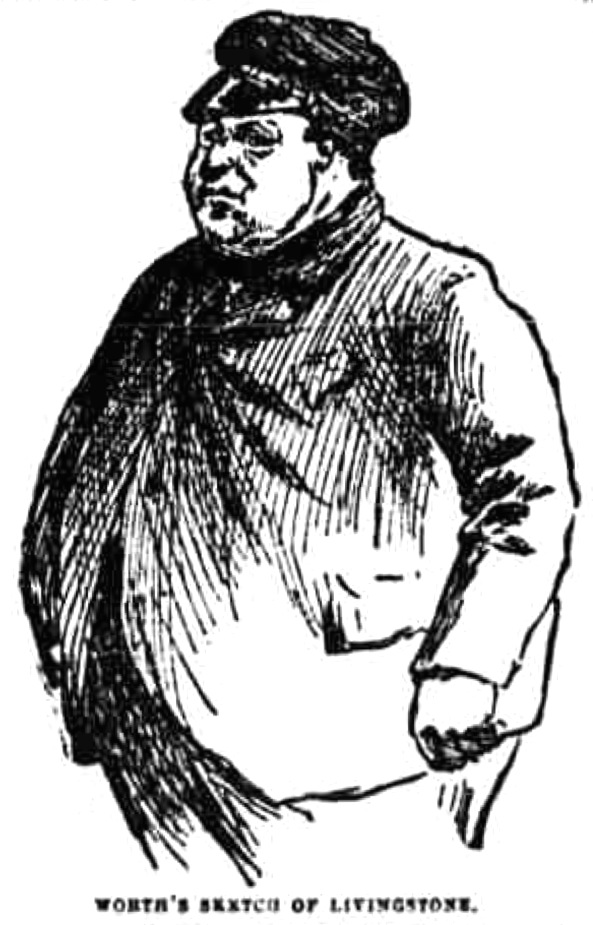
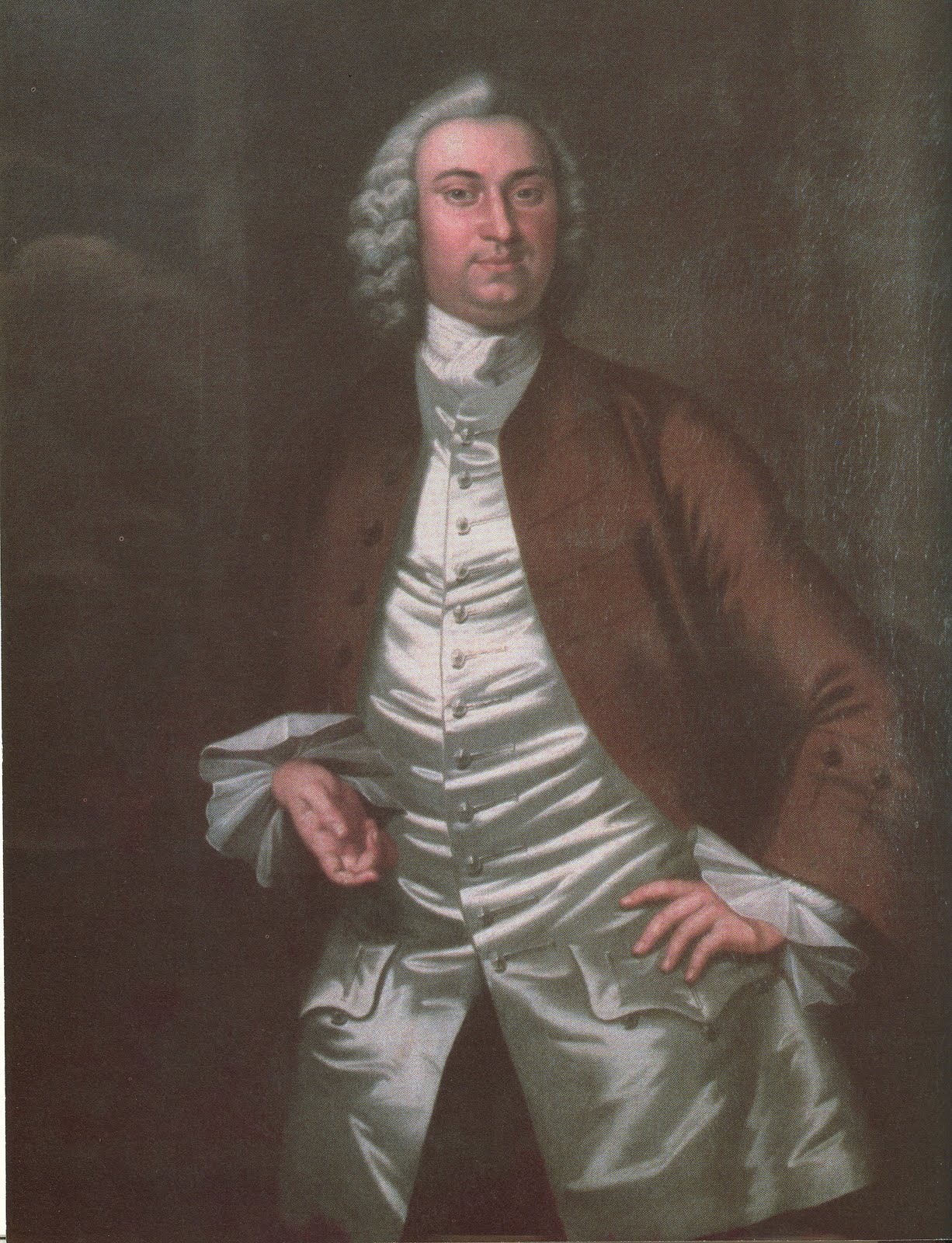
          Ok. So first and foremost who was this guy. Clearly, he was not the John Henry Livingston of Clermont.  Was he a Livingston at all? An article in the Hudson Daily Star on October 15, 1875 claims he was the son of the owner of Livingston Manor, who squandered his inheritance and was shunned by the family. He was described in the New York Evening Express as about 50, fat and jolly with a heavy double chin. He had apparently worked as a railroad conductor before turning to a life of crime. He apparently used the aliases Lewis, Matthews and DePeyster at various times according to several newspaper articles. One obituary I found, transcribed by Susan J. Mulvey claims he is the “prodigal” son of Henry W. Livingston, that he was born in 1821 and committed suicide in Albany in 1881. I can’t confirm this with the Livingston family genealogy but since that was assembled by descendants I wouldn\’t put it past them to write him out of the narrative.
          But, back to the crime at hand. Depending on the newspaper accounts I was able to find it was anywhere from several days to six weeks before anyone noticed that a forged check had been passed. At that point the police were called and the case was turned over to Detective William George Elder.He first

Thomas Worth, bank teller, artist and
crime buster.

interviewed the teller Thomas Worth. As it turned out, in addition to being a bank teller Worth was an artist for Currier & Ives. He produced a sketch of Livingston. Elder instantly recognized Livingston as a criminal he had tangled with before and the hunt was on.

So the descriptions weren\’t wrong.  

          Livingston stayed in New York City for about a week after his crime and bought several valuable horses. He had them shipped to Chatham Four Corners and then on to Buffalo. He then turned up in Buffalo where he spent another great sum of money on horses and shipped them to Chicago. He continued west and soon bought a farm or a ranch outside of Chicago at Blackberry Station.
Detectives caught up to him there either after a few months or two years depending on the source consulted. He was surprised by their visit and especially surprised when Detective Elder addressed him as “Mr. Livingston.” and denied being a forger but did not resist arrest. He had only $10,000 of the cash he had stolen left. Eventually the farm and livestock would be sold at auction to pay back the bank for its losses although ultimately only about half the money was recovered. Some of Livingston’s friends tried to start a legal action to keep him from being extradited. Elder had the legal paperwork to take Livingston back to New York but he was afraid Livingston’s friends might try a less than legal action to help him escape.
          Instead of boarding a train in Chicago, Elder and a police Captain named Yates put Livingston on a wagon and drove for twelve hours to the village of Dyer, Indiana where Elder and Livingston boarded a train for New York.
          Livingston did not serve out his sentence but was pardoned part way through. His wife and daughter had apparently sought shelter at an almshouse. After his release, he pulled off a minor scam in New York and then fled to New Orleans with his family where he managed to swindle several thousand dollars from some gentlemen.
          He next appeared in Mobile, Alabama where he tried to buy five steamboats for a fake company. His scam was found out and he fled again. He showed up in Chicago destitute during the winter of 1873-74. In the spring, he was suddenly wealthy again. Again, pretending to work for the American Express Company he attempted to withdraw $140,000 but was denied and fled back to New York City.
          In New York City, he was caught trying to scam $150 from a real estate agent with the assistance of his daughter, Jennie Lewis. He was sentenced to five years in prison, she was sentenced to two. There was a movement to have her pardoned and she was on February 19, 1876 because her crimes were committed on the order of her father. So far, I have been unable to determine her fate after her pardon. Several women named Jennie Lewis show up in the papers for everything from playing organ at church, to arrests for sand bagging and opium use, to suicide and even one Jennie Lewis who was murdered by a vengeful ex-fiance. I don’t know which one is our Jennie but I\’m hoping its the six foot tall knife fighting knock out thief.
          Livingston was suspected of many other frauds but the police were unable to pin them on him. They could not explain where he had acquired the wealth he flashed about in New York City and Chicago.
So, what happened to John Henry Livingston after his imprisonment? Maybe he went to Albany and committed suicide. Maybe he retired to a quiet life. Personally, I prefer an ending given in the Ellicottville Post in December of 1887. After detailing his crimes, they concluded:
Recently an old man has been engaged in swindling operations in the West and it thought by police that it is possible he is Livingston.

Perhaps John Henry Livingston, the well-known confidence man, rode off into the sunset swindling society gentlemen the whole way.

Do Not Expose Yourself Needlessly

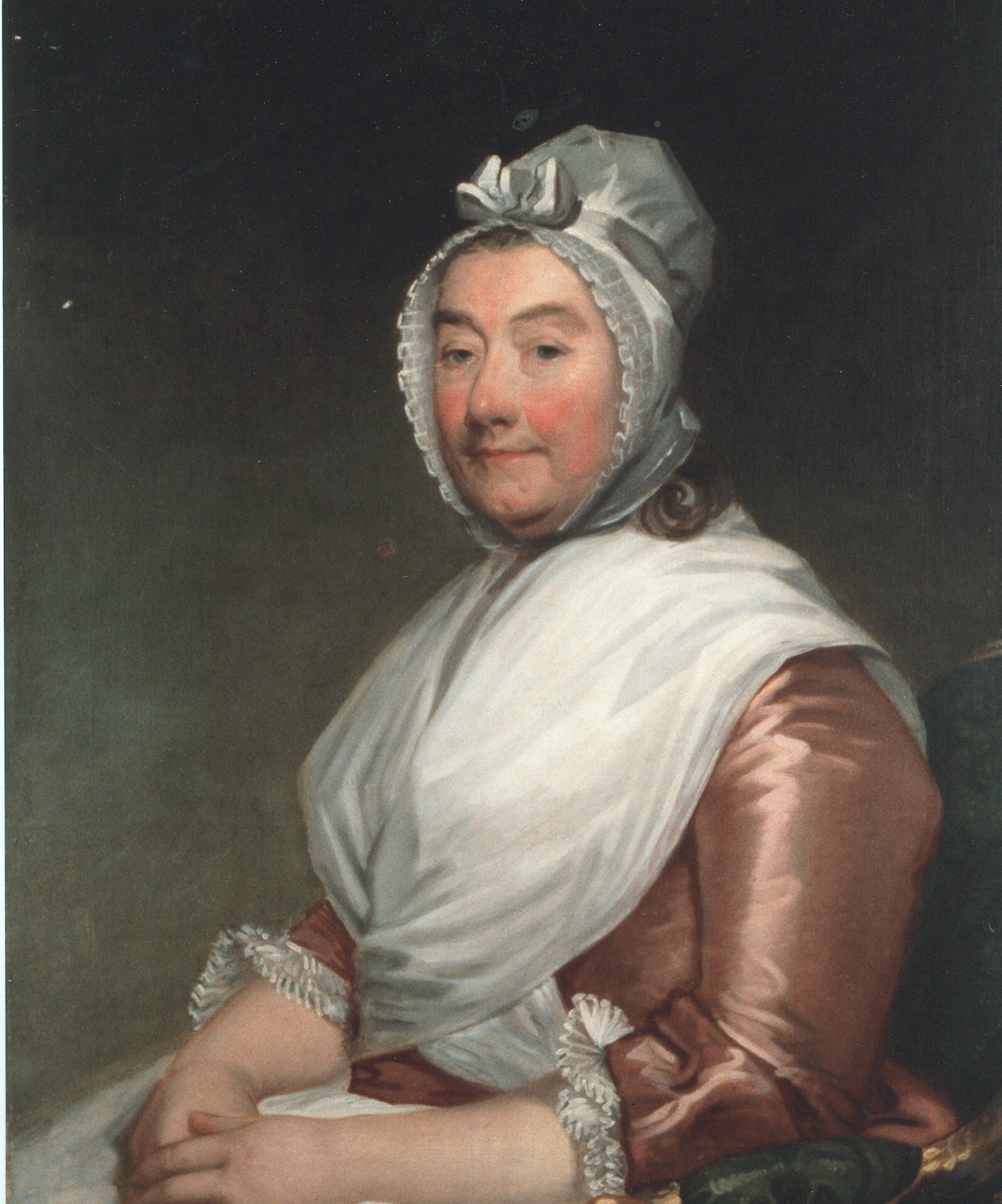
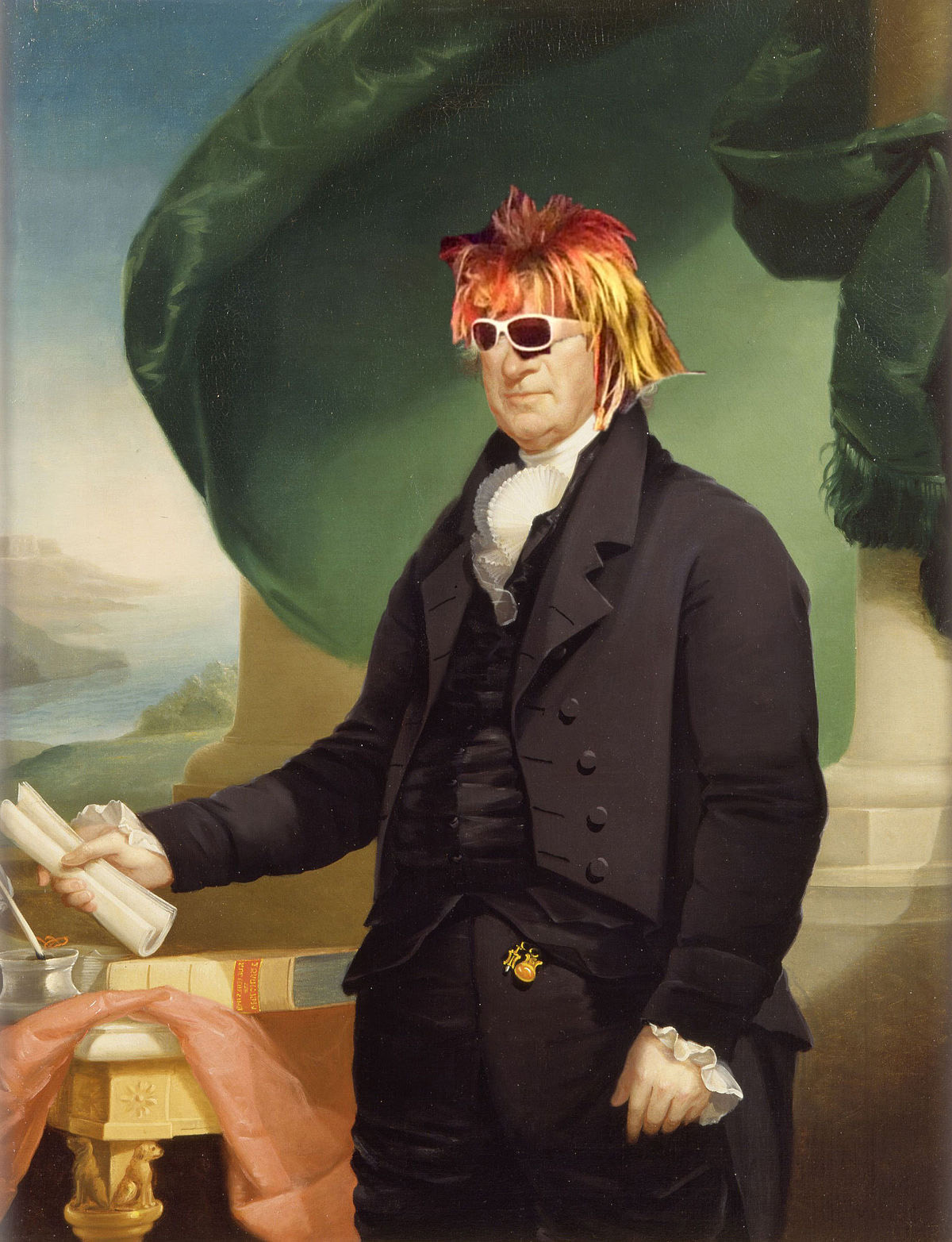
Margaret Beekman Livingston, a real person
Margaret Beekman Livingston was a strong woman. There is no denying that. She raised ten children, nine of whom turned out pretty well. She was known as a competent business woman, running her massive estate for twenty-five years after the unexpected death of her husband, Judge Robert Livingston.

When the British burned down her house and all of her outbuildings in the fall of 1777 she was able, through sheer force of will and perseverance, was able to convince Governor George Clinton to

release men from their militia obligations so they could be free to rebuild her house. She met military and political leaders, from George Washington to John Jay, and charmed them all.


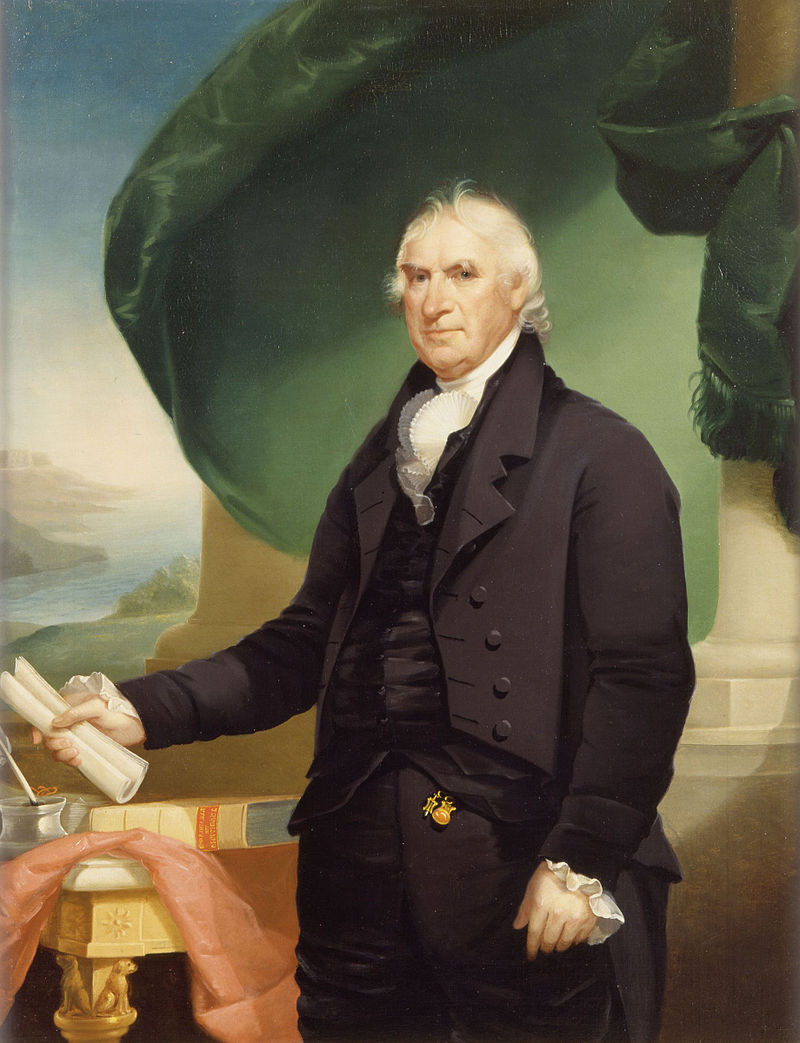
Not that George Clinton
Closer
That\’s the one
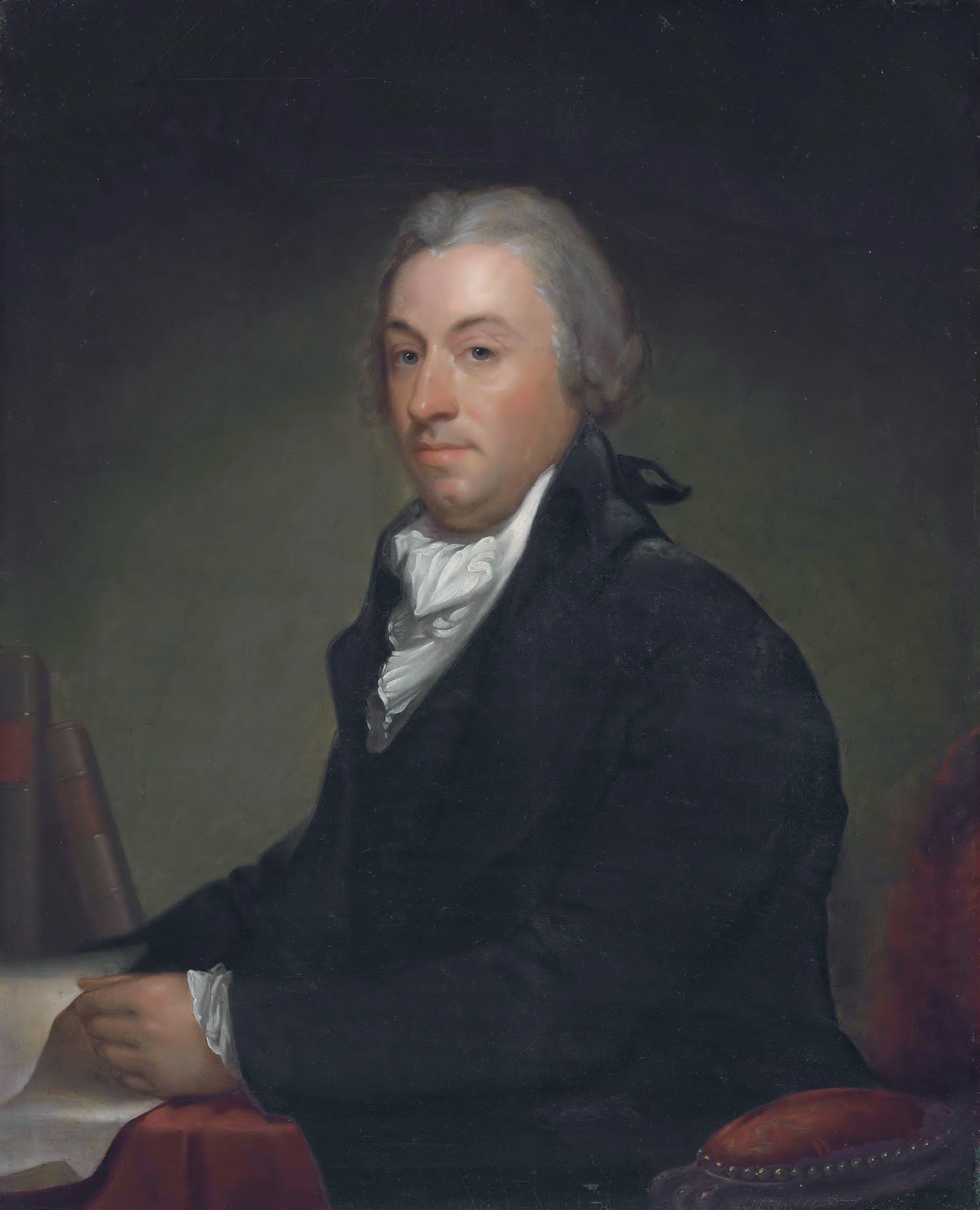
Robert R. Livingston

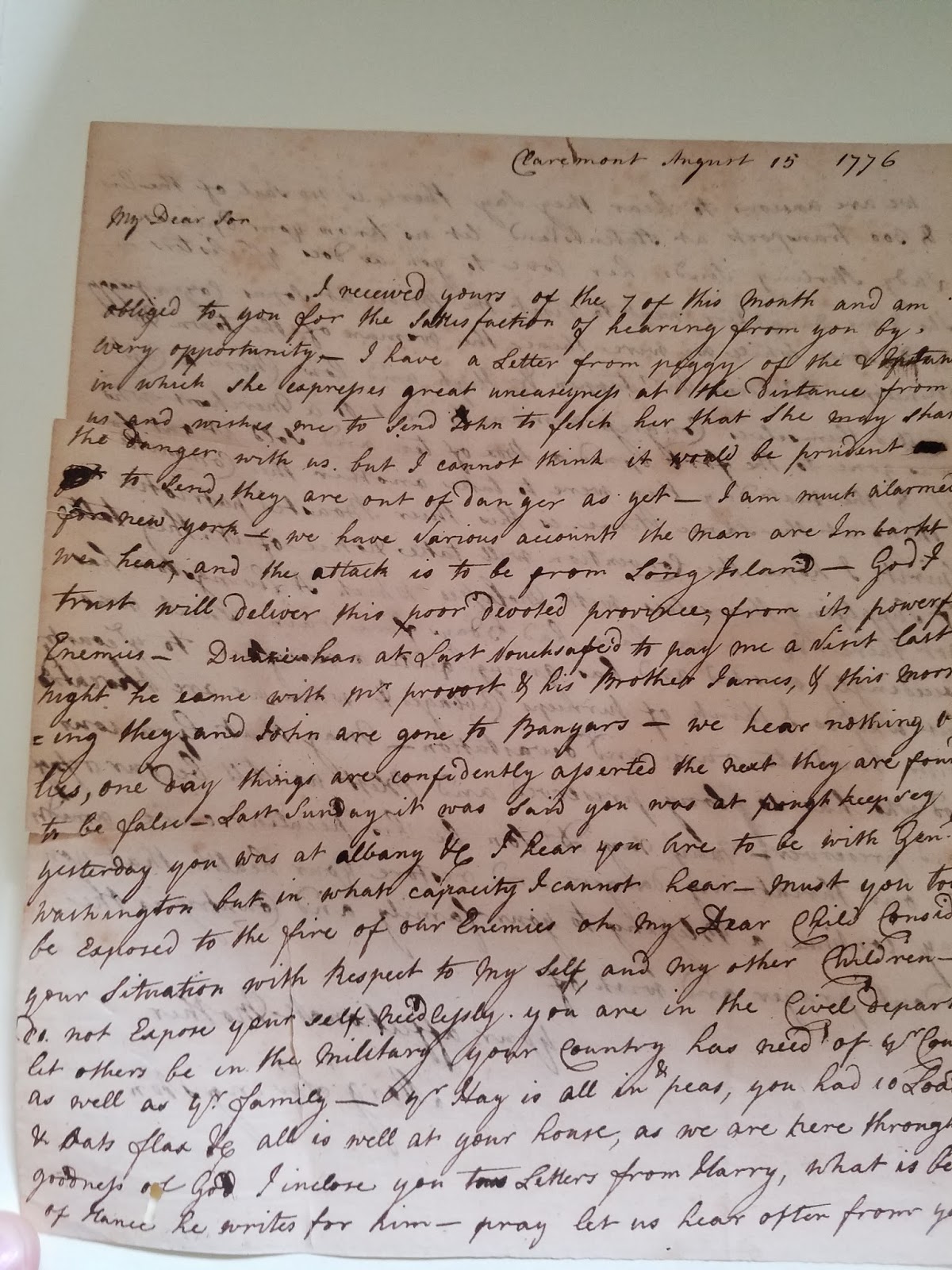
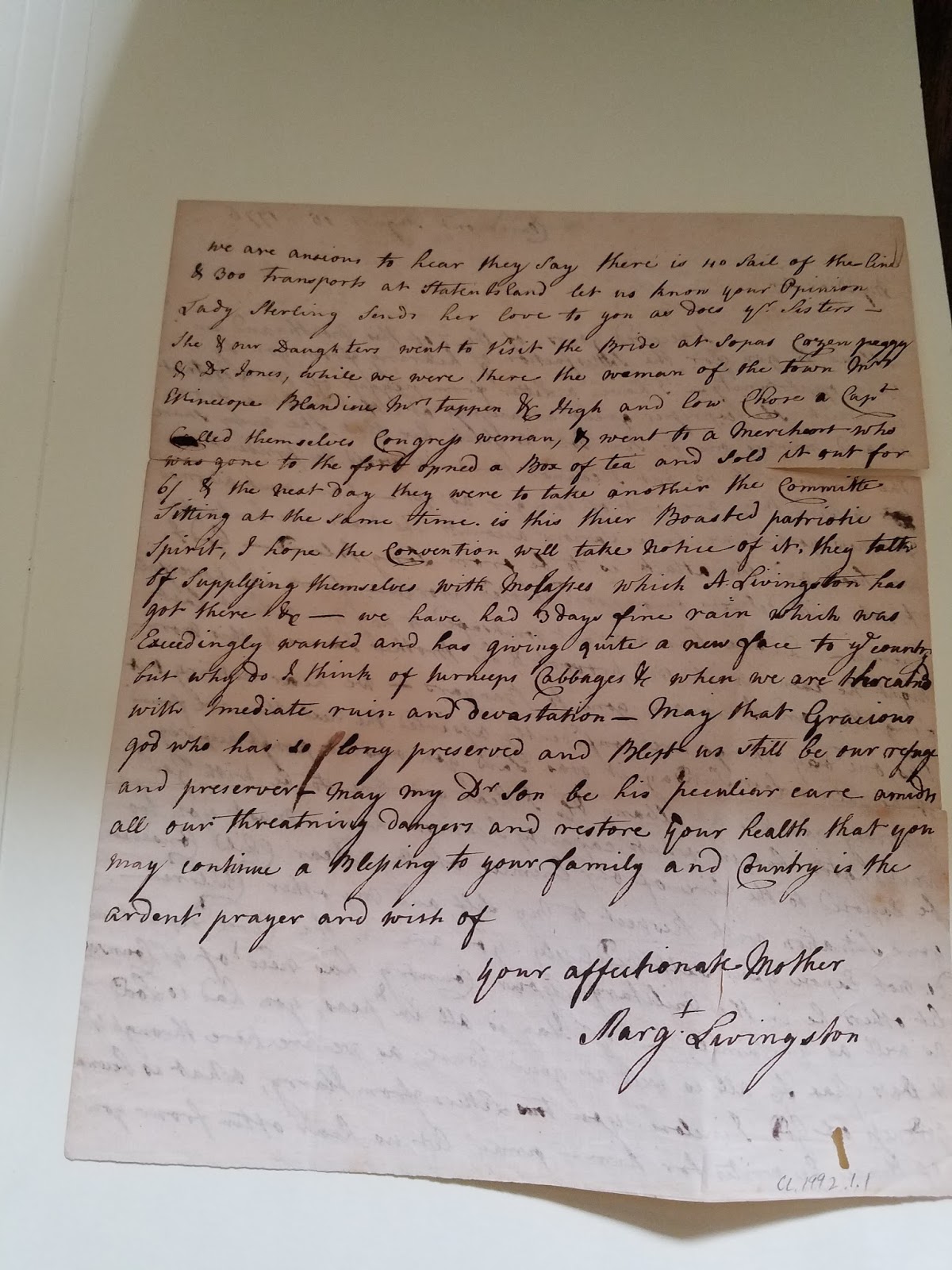
On August 15, 1776 Margaret wrote a letter to her eldest son Robert Livingston where she revealed that under her tough demeanor was a mother, scared for her child’s safety. A letter that could have been written by any mother to any child in any time of war.  She wrote:


“I hear you are to be with Genl. Washington but in what capacity I cannot hear – must you too be exposed to the fire of our Enemies oh my Dear Child Consider your situation with respect to myself, and my other children Do Not Expose yourself needlessly. You are in the Civil Department let others be in the Military your country has need of yr counsel as well as your family”


The letter in question
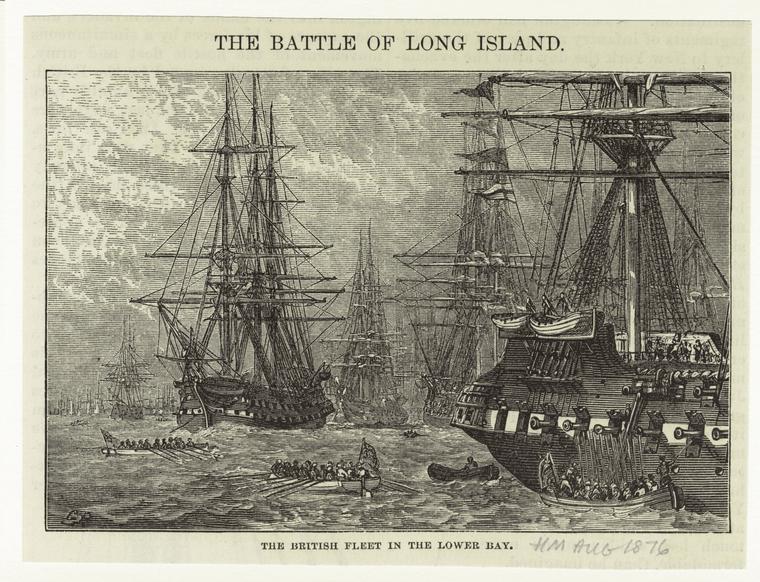
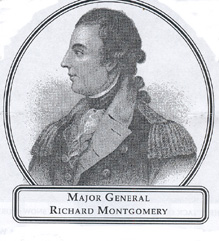
The British Army had landed on Staten Island on July 2, 1776, the same day Congress had declared Independence. By August 1, 1776 the British had more than 32,000 soldiers in New York Harbor along with a fleet of some 400 ships. Margaret, like Washington, was concerned with where the British would land next. Which of her sons would be in danger? Would any of them die like her son in law Richard Montgomery at Quebec? Would she and her family be in danger if the British came up the river? The British landed on Long Island a week after she wrote her letter. Robert was not with the army but her son Henry, a Lieutenant Colonel in the 2nd New York Regiment was trapped behind enemy lines for a period of time until he could escape to Connecticut.


Which brings up another reason for Margaret to be concerned about Robert’s safety. If something happened to him Henry Beekman Livingston would become the “man” of the family. While she had not kicked him out of the family as she later would he was still considered disagreeable at best.(Click here to learn about Henry)


Letters like this give us a glimpse into the real person, the very human, emotional person, who lived beneath the grand historical veneer that the Gilbert Stuart portrait puts upon her. We talk about her many accomplishments but can easily forget that she was a living breathing woman who feared for the safety of at least some of her children.

A Ditch Runs Through It


Why would anyone ignore him?

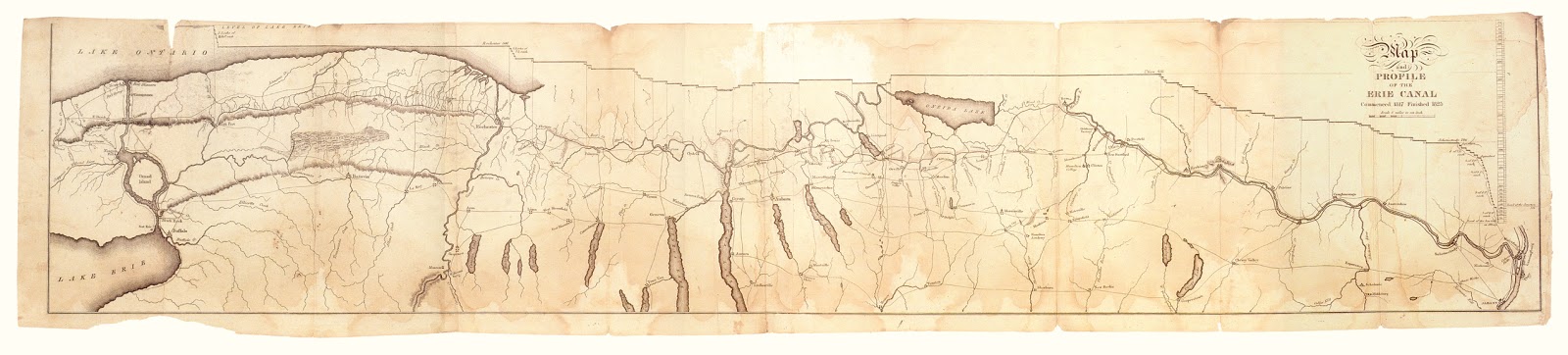
2017 marks the bicentennial of the beginning of construction of the Erie Canal. It was the canal that turned New York into the Empire State. Of course, we are talking about a government project in New York so it took a long time to arrive at the first shovel of dirt. 
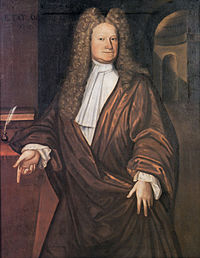
In fact, Robert Livingston, First Lord of Livingston Manor had traveled into what was then Indian territory in what would be western New York in the early 1700\’s. He reported to several successive royal governors that improvements to the natural waterways of the colony would allow access to the abundant resources of the western lands. He was ignored.
The first commission on the Erie Canal was formed in March of 1810. It was carefully assembled to include federalist and democratic-republicans. The committee included Gouverneur Morris, Stephan Van Rensselaer, William North, Thomas Eddy,

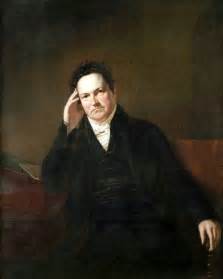
DeWitt Clinton, George Clinton\’s nephew

DeWitt Clinton, Simeon DeWitt and Peter Buell Porter. Gouverneur Morris was the titular head of the committee but it was widely known that DeWitt Clinton was the driving force behind what would become known as “Clinton’s Ditch.”

Not this George Clinton
The major accomplishment of the committee was to convince the New York State Legislature that the canal was in face a feasible project. In June of 1810 the entire committee, except for Morris, traveled by water as far as they could on the Mohawk River then, joined by Morris, traveled to Lake Erie by carriage. They then produced a report that spurred the Legislature to act, no small feat.
Robert Livingston, shipping magnate
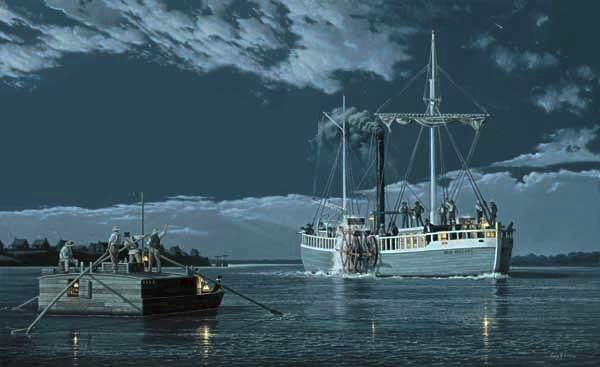
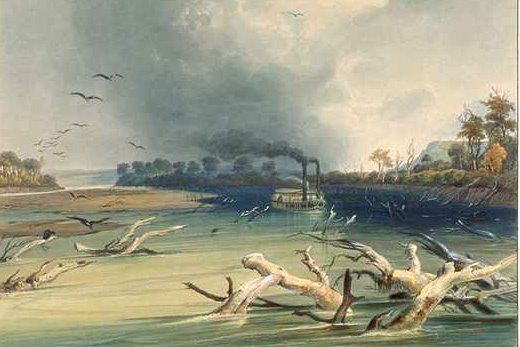
On April 8, 1811, the legislature approved $15,000 for the commission to begin their work. They also added two new members to the commission, Robert R. Livingston and Robert Fulton. Livingston and Fulton. Livingston and Fulton had a monopoly for steamboat travel on the Hudson River and were in the process of building a steamboat to ply the Mississippi River which would give them a monopoly on that river as well. Having them on board would provide an even greater economic incentive for farmers and merchants from the west to use the canal. Once the merchandise got to Albany it could be loaded onto steam boats and arrive in New York City a little over a day later.
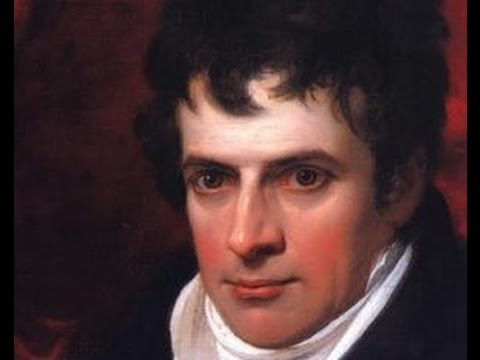
Robert Fulton. A face that just screams \”Trust me with your major engineering challenges
Fulton and Livingston quickly found important roles on the commission. Fulton was to help find designers who could build the canal while Livingston would work with DeWitt Clinton on the herculean task of  trying to find national sources of funding for the project. In October, 1811 they sent a letter to the governments of all American states and territories pointing out that the canal would benefit the entire country and that they should either pay New York to help build it or pressure the federal government to give New York funds to offset the cost of construction.
It didn’t go well.
The states that bothered to respond at all sent resounding no’s.
Shortly thereafter the small dust up known as  The War of 1812 put the canal on hold.

A kerfuffle, if you will.

The commission retained its power and in 1812 was legally allowed to create a fund to pay for the canal. (This was repealed in 1814). Although several of the commission members held or ran for other positions during the war and very little work got done.

Abraham Van Vechten
Livingston had one more role to play in the commission’s history, which he did by dying in February of 1813. Opponents of the canal in the New York legislature took the Chancellor’s death as an opportunity to challenge the authority of the entire commission, claiming that it ended when one member died and the committee would have to be reformed. Eventually Attorney General of New York, Abraham Van Vechten ruled that the power of the commissioners did not end with any particular member’s end.
It would be another four years before construction on the canal would begin. The canal was not finished until 1825.

low bridge

How to Blow Up a Gunpowder Mill

I recently received a few letters I had requested from the Gilder Lehrman Center and immediately answered a question that has nagged me for years (Read about the gunpowder mill here). I know that in late 1775 the mill exploded.
But why? I mean, yes, it was a gunpowder mill and if you make it right, gunpowder will explode. But what actually happened at Judge Robert Livingston\’s mill?

As it turns out it was the age old story. Stupidity.

Judge Robert Livingston wrote in a letter dated 15 November 1775 to his son in law, General Richard Montgomery, that

Judge Robert Livingston

\”three stupid fellows fired a piece two or three yards from the place where the powder was drying\” (The Judge had been sent a load of damaged powder from Fort Ticonderoga to try to salvage but you read my previous blog on the mill so you know this) He goes on \”which set fire to the pans & then to the powder mill which unfortunately blew up, & they with the poor powder maker are most unfortunately burnt that they live is very extraordinary about 500 lbs of powder was blown up\”

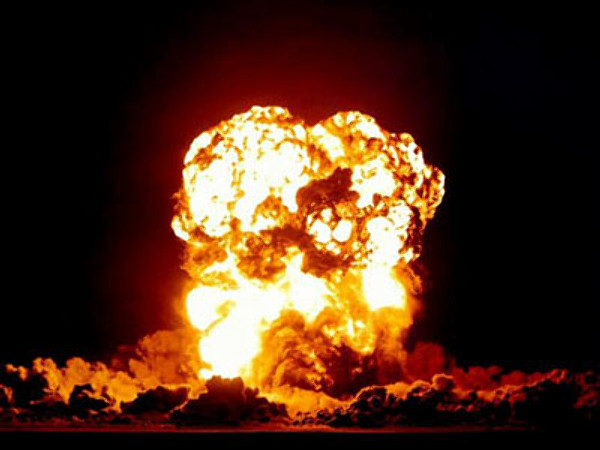
Wow. There\’s a lot there to dig into. The Judge tells us that the cause of the explosion were three chuckleheads. Its unlikely that they were employees of the mill but more likely militia men sent to guard it. He also tells us that the four men at the mill survived the explosion but were badly injured. We also know that 500 lbs of gunpowder were destroyed. I\’m not sure I can fathom what 500 lbs of gun powder looked like when it exploded but it must have been exciting.

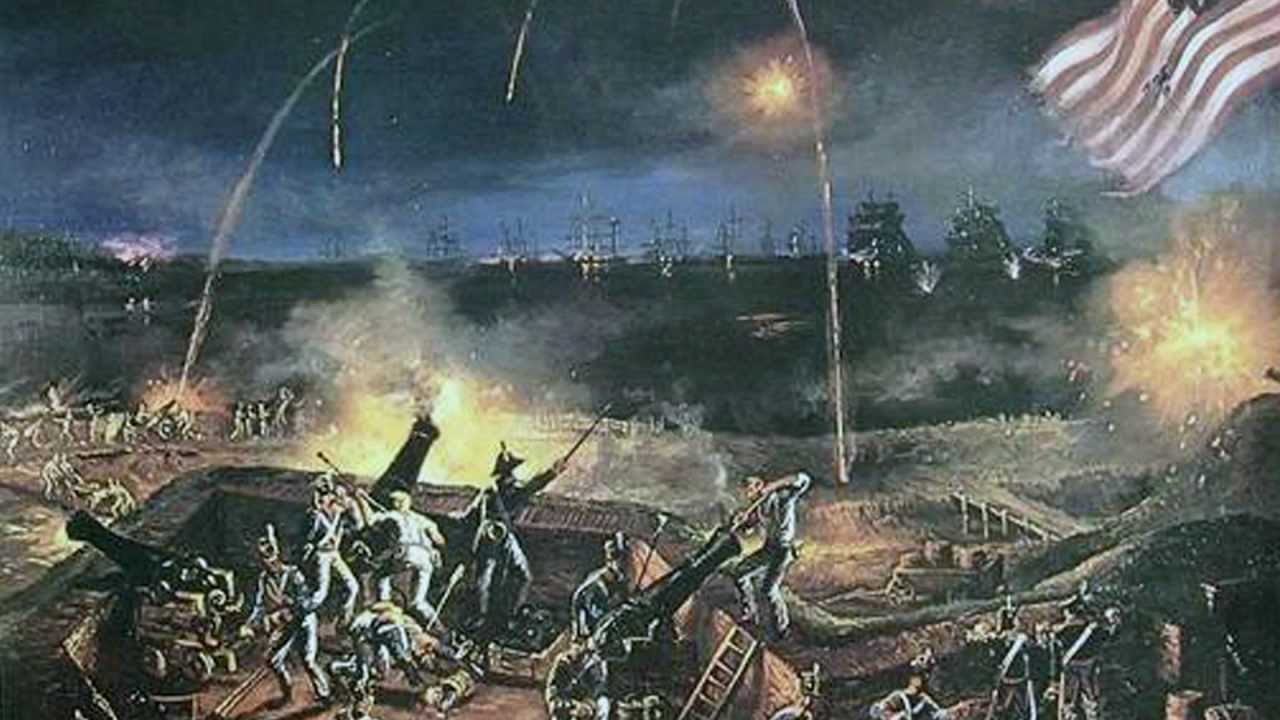
Maybe something like this? I don\’t know. I\’m guessing at least one of the guys got burned trying to walk away all slow without looking back.

He also reveals where the gunpowder was supposed to go when it was ready. Again to Montgomery the Judge wrote \”I should have been much more affected with my loss had you not met with so lucky a supply.\” This seems to indicate that the gunpowder was bound for the invasion of Canada. The \”lucky supply\” was gunpowder that Montgomery had captured from the British during his early successes during the invasion.

So one nagging historical question I\’ve had is answered. The gunpowder mill blew up because of three yokels playing with guns.

"As Approaches Madness": The Jay Treaty, New York\'s 1798 Gubenatorial Election and The Death of a Friendship


Robert R. Livingston

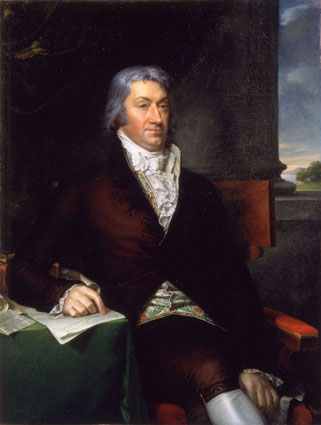
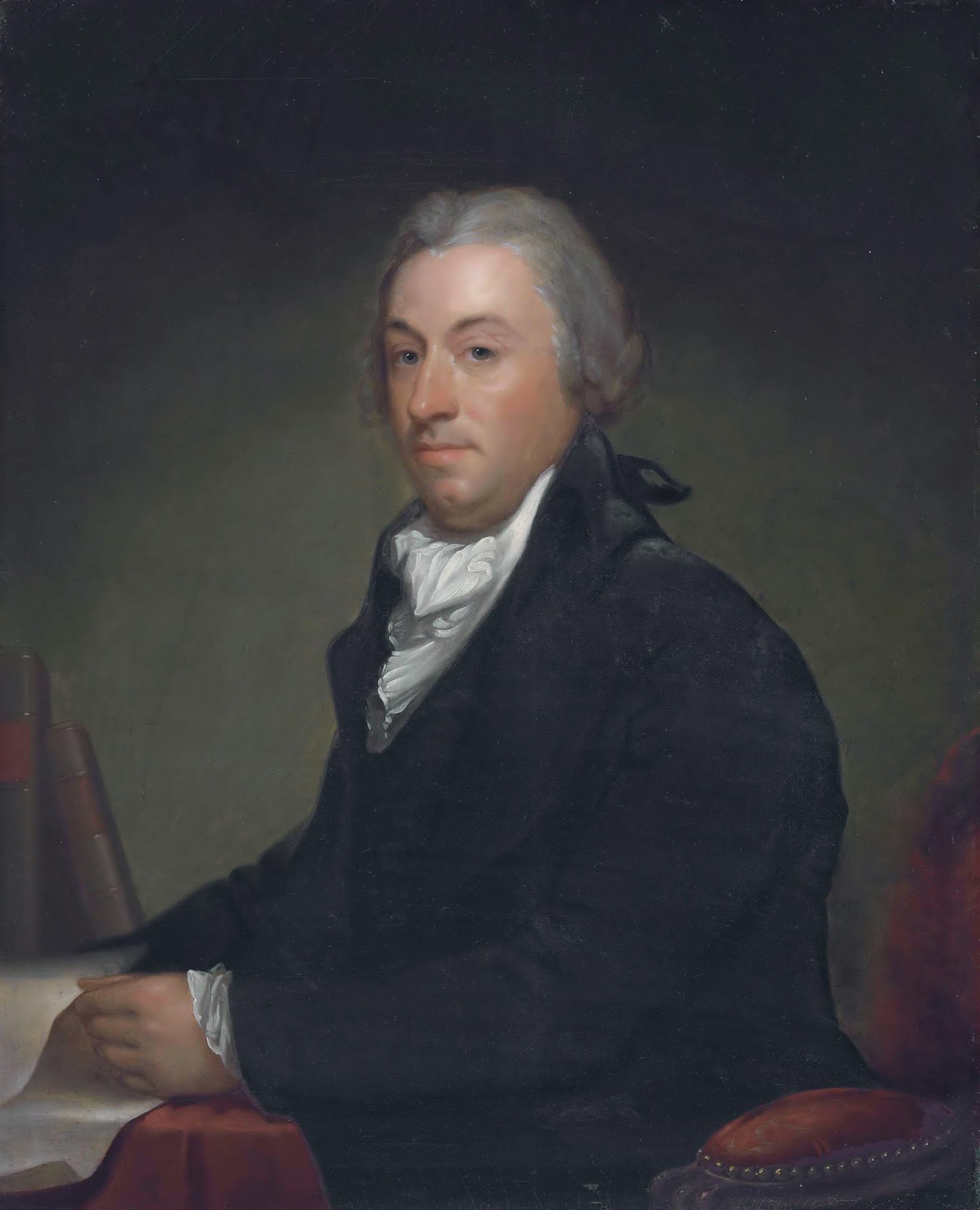
Chancellor Robert R. Livingston could be a powerful and influential friend to have. Unfortunately, it was very easy to earn the man’s enmity. As a result, Livingston retained few friends for long periods of time. His three most significant friends from before the Revolution were Richard Montgomery, Gouverneur Morris and John Jay. All three men were at one time or another as close as brothers to the Chancellor but over the years the closeness ended.

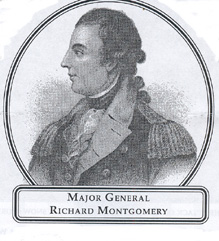
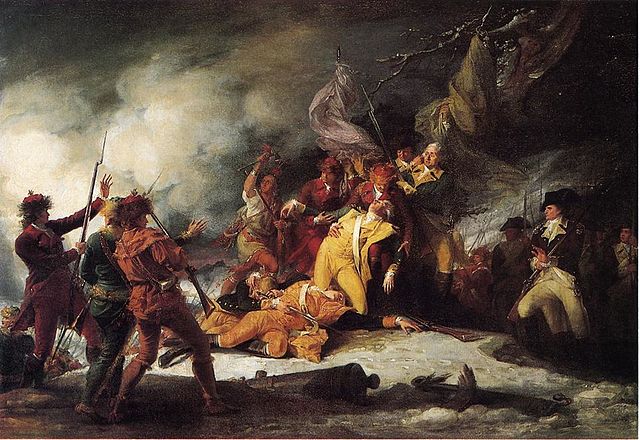
            Richard Montgomery was married to Chancellor Livingston’s older sister, Janet. The two men became close friends often spending time talking science, agriculture and politics. Both had similar political leanings. Both were sent to New York to guide New York in the early days of the war. Livingston was chosen to go to Congress in Philadelphia while Montgomery remained in New York. With Livingston’s influence, Montgomery was selected as a brigadier general in the new army. On the last day of 1775 his friendship with Livingston came to a sudden and rather violent end when he was struck by several grapeshot while leading an assault on the city of Quebec.

The real death of Montgomery was less clean and dramatic and more taking grapeshot to the head and groin


Gouverneur Morris. How could the ladies resist?

Gouverneur Morris met Livingston at King’s College, when he entered a few years behind the Chancellor. Morris and Livingston had similar backgrounds, both were from landed family, and, again, similar political leanings. During the war they frequently served together in various bodies or corresponded about their respective duties. Livingston even had Morris check into the background of Thomas Tillotson when he proposed marriage to one of the Chancellor’s younger sisters. If there was one thing about Morris that Livingston particularly disliked, it was Morris’s penchant for the ladies. Livingston once even took the time to write a letter to Morris admonishing him for spending time with ladies when he should have been attending to his Congressional responsibilities. Given his reputation as a lothario it is unlikely that Livingston would trust Morris alone with his wife, mother, daughters, sister or any particularly attractive sheep. After the war Morris moved to Pennsylvania and his duties took him away for long periods of time. While he and Livingston never formally ended their friendship they had lost the closeness they once shared.

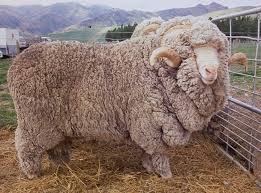
Baa.

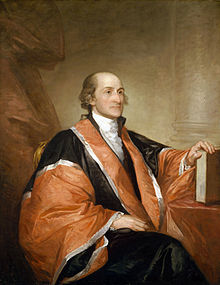
            John Jay was the Chancellor’s closest friend for many years. The two had also met at King’s College. After graduating they served their time as law clerks at the same time and passed the bar together. They briefly operated a law firm together and became fairly prominent in New York City society life. Jay even married a cousin of Livingston’s. As they matured they became the god father to each other’s children. In 1776 they made plans to live together with their wives while attending Congress but an illness for Sarah Jay prevented this from happening. During the war the men wrote the lion’s share of the New York Constitution together, they worked on the defense of the Hudson River together and they were even involved in some counter espionage together.
         

John Jay shortly before he stabbed the nation in the back

   The brother like closeness these two men shared makes the ending of their friendship all that much more tragic. The first cracks appeared during the war. In 1777 Jay tried to slip some anti-Catholic clauses into the New York Constitution which Livingston prevented. Later when Livingston was Secretary of Foreign Affairs and Jay was one of the peace negotiators in France, Livingston rebuked the negotiators for exceeding their authority and keeping the French in the dark about their negotiations. Jay responded with an enormously long letter explaining their reasoning.

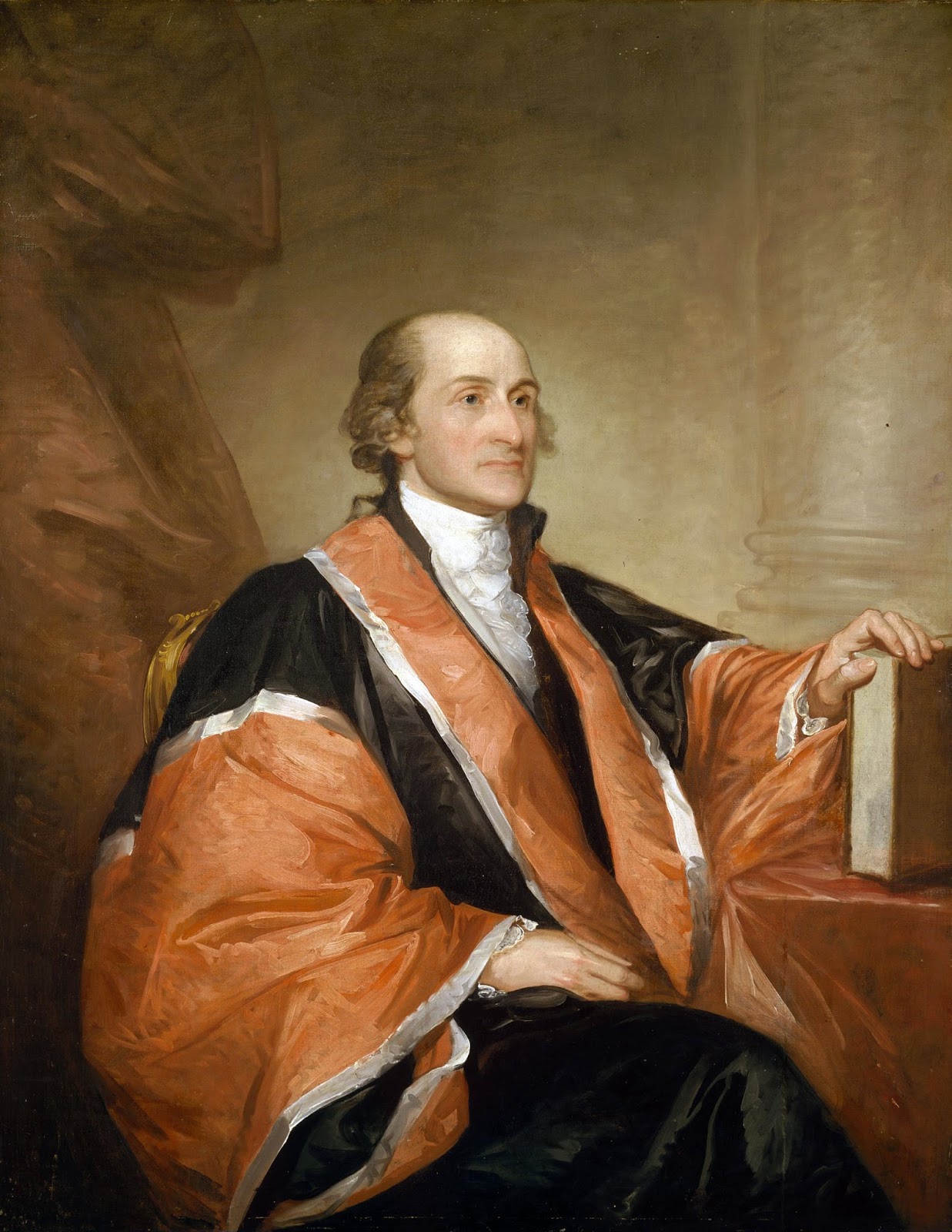
            After Livingston issued the oath of office to George Washington, making him the first President of the United States of America, his relationship with his friend Jay was further strained. Jay was made Chief Justice of the Supreme Court while Livingston received no federal title. Not only was Jay earning his enmity but so was the entire Federalist party.
            In a relatively short amount of time Robert Livingston would switch his allegiance to the Democratic-Republican party and bring along most of his family or “faction” as his political enemies preferred to call it. In 1795 John Adams celebrated the defeat of Tillotson for office as a victory over the Chancellor in a letter to his wife. “Mr. King is re-elected by the Legislature of New York by a majority of five in the House and two in the senate, in opposition to Mr. Tillotson, whom you know, to have married a Sister of Chancellor Livingstone. This is a great Point gain’d.”[i]  Of course Adams had always hated Livingston although he blamed their animosity on Livingston saying “The Passion which has influenced the Chancellor, through Life has been envy of Mr. Jay, and consequent Jealousy of the Friendship between Mr. Jay and me. He hated me because I was the friend of Mr. Jay.”[ii]

Of course everyone is jealous of you John Adams

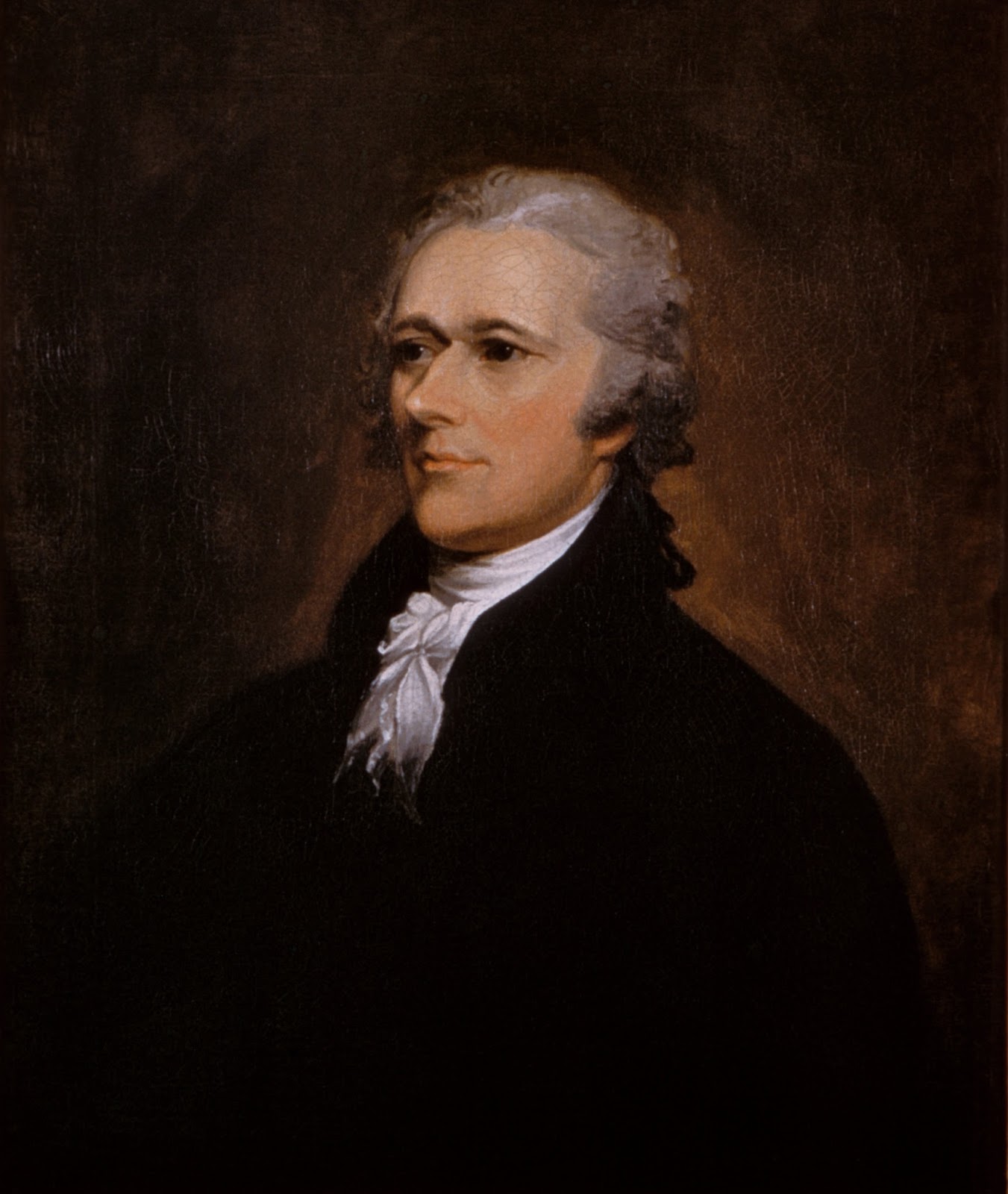
The relationship between the Livingstons and the Federalists became so bad that a cousin of Livingston’s, Maturin Livingston, very nearly dueled Alexander Hamilton in 1796 but Hamilton begged off because he already had another duel scheduled.[iii]

People still voted for the man. Twice.
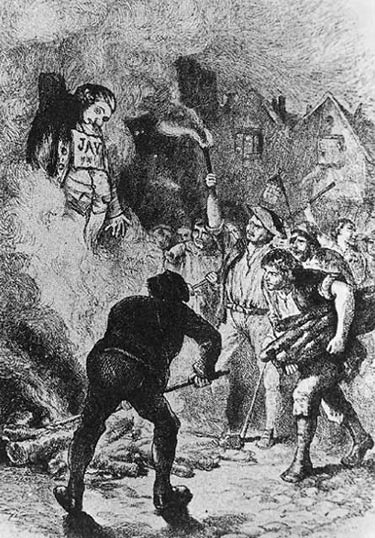
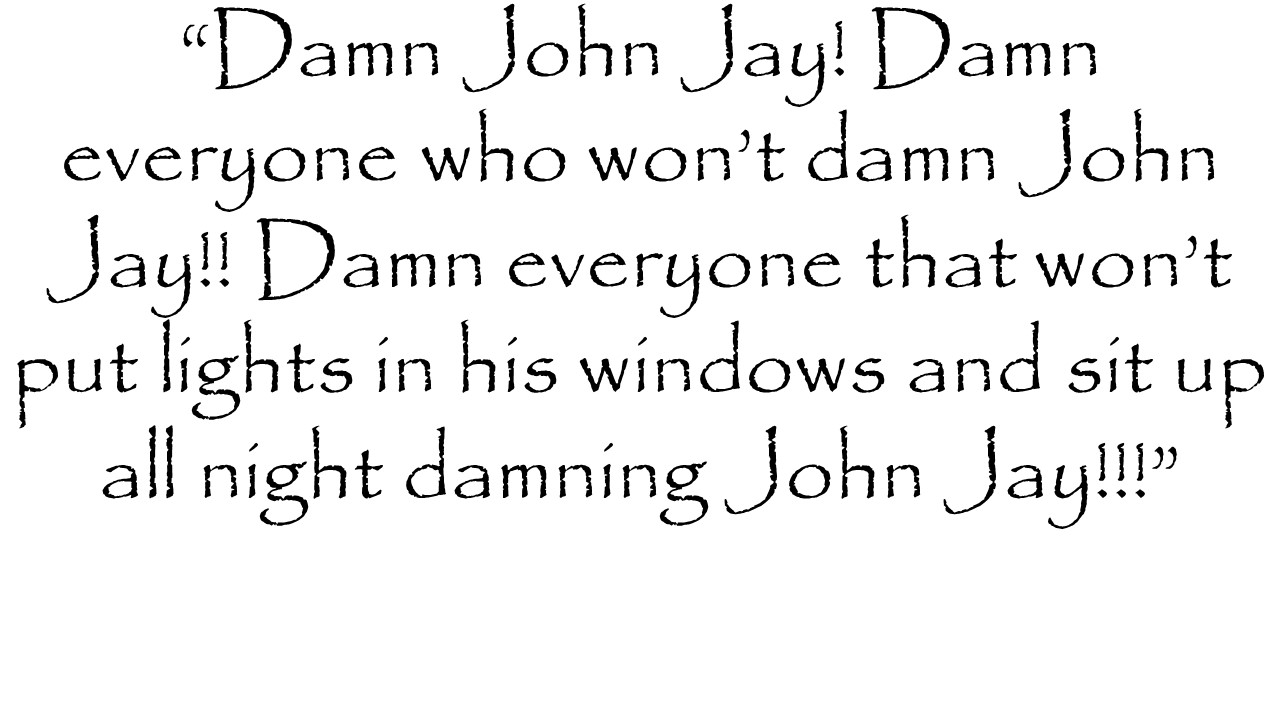
            It seemed that Livingston and Jay had a chance to become friends again in 1794, until Washington sent Jay to England to negotiate a new treaty that would tie up some loose ends from the Revolution. When the text of what became known as the “Jay Treaty” became generally known John Jay became one of the most hated men in America. People felt he had conceded far too much to the British. Jay was quoted as saying he could have traveled from Boston to

A rather elegant bit of graffiti from Boston. They don\’t vandalize like they used to.

Philadelphia at night by the light of his burning effigies. Livingston was perhaps the loudest voice criticizing the treaty. He published a series of letter under the pen name “Cato” blasting the treaty and even wrote directly to Washington to pressure him not to ratify it. To Washington he wrote; “Nothing but your glory can save under these circumstance the honor of our nation.”[iv]

Not this George Clinton

            In 1795, while he was still in England, Jay had been elected governor of New York when long time governor George Clinton declined to run again. Many had expected Livingston to be Jay’s opponent in the election but the Democratic-Republican surprisingly chose Robert Yates, whom Jay easily defeated.

            Three years later the Chancellor was chosen to run against Jay. The election was tough and dirty. Vicious ads and letters filled the newspapers. It attracted the notice of people in other states.

Seriously thought Livingston was worse than Satan

Abigail Adams wrote to her son John Quincy Adams of the Chancellor “An insatiable Ambition devours the Chancellor. To see Mr. Jay stand higher in the publick estimation and Elected chief over him; fills him with the same sensations, which Milton puts into the mouth of the Arch Fiend. “Better to Reign in Hell, than serve in Heaven.””[v] That’s right. She compared him to Satan. Thomas Jefferson wrote to James Madison “Hard elections are expected there between Jay & Livingston.”[vi]

 Worse yet the Federalists of New York moved in masse against the Chancellor. Alexander Hamilton, who had never forgiven Livingston for opposing his financial plans in the 1780’s, went so far as to write to Timothy Pickering to ask him to examine the papers of the Chancellor from his time as Secretary for Foreign Affairs looking for ammunition to use against him.[vii]
            At one point during the campaign Livingston paid a visit to Philip Schuyler at Schuyler Mansion in

Philip Schuyler, \”Go to Canada? I mean ow, my toe.\”

Albany. Livingston and Schuyler had often found themselves on the same side during the war, even though a very convenient case of gout kept Schuyler from commanding the expedition against Canada which effectively ended with Montgomery’s death. Livingston complained of Jay and the federal government, perhaps forgetting the Schuyler was Alexander Hamilton’s father-in-law. No sooner had Livingston finished his rant and departed the house than Schuyler put quill to paper to report the meeting to Hamilton; “he and his friends are Assiduous in blackening Mr. Jay’s character.”  He went on to say of the Chancellor “The man my dear Sir has worked himself up to such a pitch of Enmity against our Government as approaches Madness.”[viii]

Lets be honest Schuyler Mansion (top) really was shabby compared to the elegant Arryl House (bottom)

            Livingston lost the election. Three years later Thomas Jefferson sent him to France. He returned a few years later having doubled the size of the country with the Louisiana Purchase and went on to a life of success in agriculture and business. In the meantime, his “faction” had seen to the end of the political careers of Aaron Burr and Alexander Hamilton.(Check that story out here)  Jay had retired from public service in 1801 to become a farmer but he and Livingston never spoke again.


[i]John Adams to Abigail Adams 29 January 1795 Adams Papers
[ii]John Adams to Francois Adriaan Van Der Kemp, 23 August 1806 Adams Papers
[iii]  See letters between Hamilton and Maturin Livingston January 18, 20 and 21, 1796. Hamilton Papers
[iv]Robert R. Livingston to George Washington, 8 July 1795 Washington Papers
[v]Abigail Smith Adams to John Quincy Adams 27 May 1798, Adams papers
[vi]Thomas Jefferson to James Madison 3 January 1798, Madison Papers
[vii]See letters between Alexander Hamilton and Timothy Pickering 10 February and 5 April 1797 Hamilton Papers.
[viii]Philip Schuyler to Alexander Hamilton, 31 March 1798, Hamilton Papers

"That odious reptile tribe that breed in the sunshine of despotic power" Edward Livingston and the Alien Bill

Edward Livingston
John Adams, apparently not the only president to not understand  the Constitution

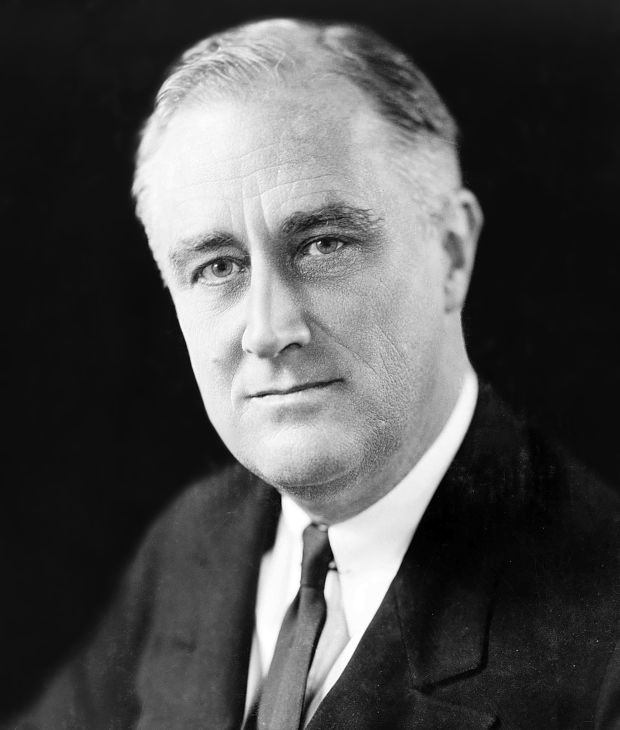
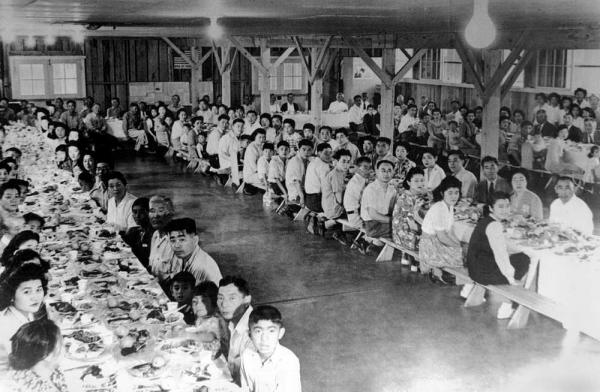
I recently stumbled upon a speech given by Edward Livingston in the House of Representatives during the debate on the Alien Bill in 1798 in the Evans Collection of Early American Imprints. This was part of the famous Alien and Sedition Acts signed into law by John Adams during the undeclared war with France. Federalists were seeing enemies everywhere and were intent on dealing with them regardless of what the law said. As a Democratic Republican representing New York\’s 2nd District, Livingston was opposed to the bills altogether. He had been away from Congress and arrived back just in time to hear the third reading of the bill and after speaking against the bill, voted against it. All four bills that made up the Alien and Sedition Acts were passed anyway. Three were repealed shortly thereafter when Thomas Jefferson became president. The fourth,  The Alien Enemies Act, is technically still in effect having most infamously been used by Franklin Roosevelt to inter Japanese living in America during World War II

What I found interesting about the speech is that it fits incredibly well into the debate about the recent executive order to come out of the White House. This is an example of the old cliche that history repeats itself. Its also a lesson in what can happen when the government acts out of fear instead of humanity, compassion and good sense.

I\’ve pulled a few of my favorite quotes out of the text below. The whole speech is below those.

\”We must legislate upon facts, not on surmises—we must have evidence, not vague suspicions, if we mean to legislate with prudence\”

Franklin Roosevelt

\” the crime is \”exciting the suspicions of the president,\” but no man can tell what conduct will avoid that suspicion—a careless word, perhaps misrepresented or never spoken, may be sufficient evidence, a look may destroy, an idle gesture may insure punishment, no innocence can protect—no circumspection can avoid the jealousy of suspicion—surrounded by spies, informers and all that infamous herd which fatten under laws like this.\”

\”will the PEOPLE SUBMIT to our unauthorized acts? will the states sanction our usurped power? Sir, they ought not to submit—they would deserve the chains which these measures are forging for them, if they did not resist. For let no man vainly imagine that the evil is to stop here, that a few unprotected aliens only are to be affected by this inquisitorial power; the same arguments which enforce those provisions against aliens, apply with equal strength to enacting them in the case of citizens\”

\”the people of America, sir, though watchful against foreign aggression are not careless of domestic encroachment; they are as jealous, sir, of their liberties at home, as of the power and prosperity of their country abroad: they will awake to a sense of their danger; do not let us flatter ourselves then that these measures will be unobserved or disregarded. Do not let us be told, sir, that we excite a fervour against foreign aggression, only to establish tyranny at home; that, like the arch traitor, we cry \”Hail, Columbia,\” at the moment we are betraying her to destruction: that we sing out \”happy land,\” when we are plunging it in ruin or disgrace: and that we are absurd enough to call our∣selves \”free and enlightened,\” while we advocate principles that would have disgraced the age of Gothic barbarity, and establish a code compared to which the ordeal is wise, and the trial by battle is merciful and just.\”

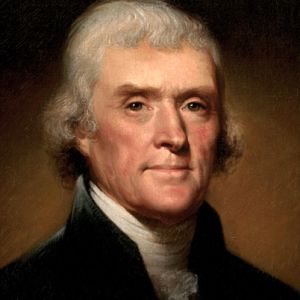
Jefferson, repealed 75% of the Alien and Sedition Acts

Speech of Edward Livingston.

MR. LIVINGSTON said he esteemed it one of the most fortunate occurrences of his life, that after an inevitable absence from his seat in that house, he had arrived in time to express his dissent to the passage of the bill. It would have been a source of eternal regret, and the keenest remorse, if any private affairs, however urgent, any domestic concerns, however interesting, had deprived him of the opportunity he was then about to use, of stating his objections, and recording his vote against an act which he believed was in direct violation of the constitution; and marked with every characteristic of the most odious despotism.

On my arrival, sir, mr. L. said, I enquired what subject occupied the attention of the house; and being told it was the alien bill, I directed the printed copy to be brought to me, but to my great surprise seven or eight copies of different acts on the same subject were put in my hands—among them it was difficult (so strongly were they marked by the same family features), to dis∣cover the individual bill then under discussion. This circumstance give me a suspicion that the principles of the measures were erroneous—Truth marches directly to its end by a single undeviating path—Error is either undetermined on its object, or pursues it through a thousand winding ways—the multiplicity of propositions therefore to attain the same general but doubtful end, led me to suspect that neither the object nor the means proposed to attain it were proper or necessary. These surmises were confirmed by a more minute examination of the act—In the construction of statutes, it was a received rule to examine what were the state of things when it was passed, and what were the evils it was in∣tended to remedy—as these circumstances would be applied in the construction of the law, it might be well to examine them minutely in framing it—the state of things, if we are to judge from the complexion of the bill, must be that a number of aliens, enjoying the protection of our government, were plotting its destruction—that they are engaged in treasonable machinations against a people who have given them an asylum and support, and that no provision is found to provide for their expulsion and punishment. If these things are so and no remedy exists for the evil, one ought speedily to be provided, but even then it must be a remedy that is consistent with the constitution under which we act—for as by that instrument, all powers not expressly given by it to the union, are reserved by the states—it follows that unless an express authority can be found, vesting us with the power, be the evil never so great it can only be remedied by the several states who have never delegated the authority to congress—but this point will be presently examined, and it will not be a difficult task to shew that the provisions of this bill are not only unauthorised by the constitution, but are in direct violation of its fundamental principles, and contradictory to some of its most express prohibitions; at present it is only necessary to ask whether the state of things contemplated by the bill have any existence—We must legislate upon facts, not on surmises—we must have evidence, not vague suspicions, if we mean to legislate with prudence—What facts have been produced? What evidence had been submitted to the house? I have heard, sir, of none—but if evidence of facts could not be pro∣cured, at least it might have been expected that reason∣able cause of suspicion should be shewn—here again gentlemen were at fault—they could not shew even a suspicion why these aliens ought to be suspected. We have, indeed, been told that the fate of Venice, Switzerland, and Batavia, was produced by the interference of foreigners. But, the instances were unfortunate—be∣cause all those powers had been overcome by foreign force, or divided by domestic faction, not by aliens who resided among them; and if any instruction was to be gained from those republics, it would be that we ought to banish not the aliens but all those who did not approve the executive this I 〈…〉were not ready to own—but if this measure prevailed, I shall not think the other remote; but if it had been proved that these governments were destroyed by the conspiracies of aliens, it yet remains to shew that we are in the same situation; or that any such plots have been detected or are even reasonably suspected here. Nothing of this kind has been yet done. A modern Theseus, indeed, has told us he has procured a clue that enable him to penetrate the labyrinth and destroy this monster of sedition. Who the fair Ariadne is who kindly gave him the ball he has not revealed: nor though several days have elapsed since he undertook the adventure, has he yet told where the monster lurks. No evidence then being produced, we have a right to say that none exists, and yet we are about to sanction a most important act, and on what grounds? our individual suspicions, our private fears, our over-heated imaginations. Seeing nothing to excite those suspicions, and not feeling those fears, I could not give my assent to the bill, even if I did not feel a superior obligation to reject it on other grounds. As far as my own observation goes, I have seen nothing like the state of things contemplated by the bill. Most of the aliens I have seen were either triumphant Englishmen, or Frenchmen, with dejection in their countenances and grief at their hearts, preparing to quit the country and seek another asylum. But if these plots exist, if this treason is apparent, if there are aliens guilty of the crimes that are ascribed to them, an effectual remedy presents itself for the evil; we have already wise laws, we have upright judges and vigilant magistrates, and there is no necessity of arming the executive with the destructive power proposed by the bill now on your table—the laws now in force are competent to punish every treasonable or seditions attempt.
But grant, sir, what however has not been at all supported by fact, grant that these fears are not visionary, that the dangers are imminent and that no existing law is sufficient to avert them; let us examine whether the provisions of the bill are conformable to the principles of the constitution: if it should be found to contravene them, I trust it will lose many of its present supporters; but if not only contrary to the general spirit and principles of the constitution, it should also be found diametrically opposite to its most express prohibitions, I cannot doubt that it would be rejected with that indignant decision which our duty to our country, and our sacred oath demands.
The first section provides that it shall be lawful for the President, \”to order all such aliens as he shall judge dangerous to the peace and safety of the United States, or shall have reasonable ground to suspect are concerned in any treasonable or secret machinations against the goverment thereof, to depart out of the United States, in such time as shall be expressed in such order.\”
Our goverment, sir, is founded on the establishment of those principles which constitute the difference be∣tween a free constitution, and a despotic power; a distribution of the legislative, executive and judiciary powers, into special hands, a distribution, strongly marked in three first and great divisions of the constitution—by first—all legislative power is given to Congress, the second vests all executive functions in the president, and the third declares that the judiciary power shall be exercised by the supreme and inferior courts; here then is a division, of the govermental powers strongly marked, decisively pronounced, and every act of one or all of the branches that tends to confound these powers, or alter this arrangement must be destructive of the constitution: examine then, sir, the bill on your table, and declare whether the few lines I have repeated from the first section do not confound these fundamental powers of the government, vest them all in the most unqualified terms in one hand, and thus subvert the basis on which our liberties rest.
Legislative power prescribes the rule of action; the judiciary applies that general rule to particular cases, and it is the province of the executive to see that the laws are carried into full effect. In all free goverments these powers are exercised by different men, and their union in the same hand is the peculiar characteristic of despotism: if the same power that makes the law can construe it to suit his interest and apply it to gratify his vengance, if he can go further, and execute according to his own passions, the judgment which he, himself, has pronounced upon his own construction, of laws, which he alone has made, what other features are wanted to complete the picture of tyrany; yet all this and more is proposed to be done by this act; by it the president alone, is empowered to make the law, to fix in his own mind, what acts, what words what thoughts or looks, shall constitute the crime contemplated by the bill; that is the crime of being \”suspected to be dangerous to the peace and safety of the United States.\” He is not only authorized to make this law, for his, own conduct, but to vary it at pleasure, as every gust of passion, every cloud of suspicion, shall agitate or darken his mind; the same power that formed the law then applies it to the guilty or innocent victim whom his own suspicions or the secret whisper of a spy have designated as its object; the president then having made the law, the president having considered and applied it, the same president is by the bill, authorized to execute his sentence, in case of disobedience, by imprisonment, during his pleasure. This, then comes completely within the definition of despotism, and uni∣on of legislative, executive, and judicial powers. But this bill, sir, does not stop here, its provisions are a refinement upon despotism and present an image of the most fearful tyranny—Even in despotisms, though the monarch legislates, judges and executes, yet he legislates openly, his laws though oppressive, are known, they precede the offence, and every man who chooses may avoid the penalties of disobedience. Yet he judges and executes by proxy, and his present interest or passions do not inflame the mind of his deputy.
But here the law is closely concealed in the same mind that gives it birth—the crime is \”exciting the suspicions of the president,\” but no man can tell what conduct will avoid that suspicion—a careless word, perhaps misrepresented or never spoken, may be sufficient evidence, a look may destroy, an idle gesture may insure punishment, no innocence can protect—no circumspection can avoid the jealousy of suspicion—surrounded by spies, informers and all that infamous herd which fatten under laws like this. The unfortunate stranger will never know either of the law, of the accusation or of the judgment until the moment it is put into execution—he will detest your tyranny, and from a land of delators, inquisitions and spies.
This, 〈…〉 the detestable contrivance of the 〈…〉 the table of their laws high that few could read them; a tall man, however, might reach, a short one might climb and learn their contents, but here is the law is equally in∣accessible to high and low; safely concealed in the breast of its author, no industry or caution can penetrate this recess and attain a knowlege of its provisions, nor even if they could, as the rule is not permanent would it at all avail.
Having shewn that this act is at war with the fundamental principles of our government, I might stop here in the certain hope, of its rejection—But I can do more; unless we are resolved to pervert the meaning of terms, I can shew that the constitution has endeavoured to \”make its surety doubly sure, and take a bond of fate!\” by several express prohibitions of measures like that you now contemplate. One of these is contained in the 9th section of the first article, it is at the head of the articles which restrict the powers of Congress, and declares \”that the migration or importation of such persons, as any of the states, shall think proper to omit, shall not be prohibited prior to the year 1808\” Now, sir, where is the difference between a power to prevent the arrival of aliens and a power to send them away as soon as they shall arrive? to me they appear precisely the same. The constitution expressly says, that congress shall not do this, and yet congress are about to delegate this prohibited power, and say, that the president may excercise it as often as his pleasure may direct. I am informed that an answer has been attempted to this argument, by saying, that the article, though it speaks of \”persons.\” only relates to slaves? But a conclusive reply to this answer may be drawn from the words of the section, it speaks of migration and importation; if it related only to slaves, \”importation,\” would have been sufficient; but how can the other word apply to slaves; migration is a voluntary change of a country; but who ever heard of a migration of slaves! the truth is, both words have their appropriate meaning, and even ex∣tended to secure the interests of different quarters of the union? The middle states wished to secure themselves against any laws that might impede the emigration of settlers; the southern states did not like to be prohibited in the importation of slaves, and so jealous were they of this provision, that the fifth article was introduced to declare that the constitution shall not be a∣mended so as to do it away.
But even admit the absurdity, that the word, \”migration\” has no meaning, or one foreign to its usual acceptation, and that the article relates only to slaves; Even this sacrifice of common sense will not help gentlemen out of their dilemma—slaves probably always, but certainly on their first importation, are aliens, many people think they are always \”dangerous to the peace and safety of the United States!\” if the president should be of this opinion, he not only can, but by the terms of this law, is obliged to order them off; for the act creates an obligation on him to send away all such aliens as he shall judge dangerous to the peace or safety of the United States. Thus, according to the most favourable construction, every proprietor of this species of property, holds it at the will and pleasure of the president—and this, too, in defiance of the only article of the constitution, that is declared to be unalterable.—But let us, sir, for a moment, if it be possible, let us imagine that a constitution, founded on a division of powers, into three hands, may be preserved, although all these powers should be surrendered into one; let us imagine, if we can, that the states intended to re∣strict the general government, from preventing the arrival of persons whom they were yet willing to suffer that same general goverment to ship off as soon as they should arrive: grant all this; and they will be as far from establishing the constitutionality of the bill, as they were at the first moment it was proposed—for in the 3d article it is provided, that all \”judicial power shall be vested in the supreme and inferior courts,\” that the trial of \”all crimes shall be by jury,\” except in case of impeachment; and in the 7th and 8th amendments, provision is repeated and enforced by others this which declare, that \”no man shall be held to answer for a capital or otherwise infamous crime, unless on a presentment of a grand jury\” that \”in all criminal prosecutions the accused shall enjoy the right to a speedy and public trial, by an impartial jury of the state and district where the crime shall have been committed, which district shall have been previously ascertained by law; and to be informed of the nature and cause of the accusation, to be confronted with the witnesses against him, to have compulsory process for obtaining witnesses in his favour, and to have the assistance of council for his defence\”—Now, sir, what minute article in these several provisions of the constitution is there that is not violated by this bill? all the bulwarks which it opposed to encroachments on personal liberty, fall before this engine of oppression.
Judiciary power is taken from courts, and given to the executive, the previous safeguard of a presentment by a grand inquest is removed, the trial by jury is abolished: the \”public trial required by the constitution is changed into a secret and worse than inquisitorial tribunal: instead of giving \”information of the nature and cause of the accusation,\” the criminal, alike ignorant of his offence and the danger to which he is exposed, never hears of either until the judgment is passed, and the sentence is executed: instead of being \”confronted with his accusers,\” he is kept alike ignorant of their names and their existence, and even the forms of a trial being dispensed with, it would be a mockery to talk of \”process for witnesses,\” or the \”assistance of council for defence,\” thus are all the barriers which the wisdom and humanity of our country had placed between accused innocence and oppressive power at once forced and broke down. Not a vestige even of their form remains. No indictment, no jury, no trial—no public procedure, no statement of the accusation; no examination of the witnesses in its support. No council for defence—all is darkness, silence, mystery, and suspicion. But as if this were not enough; the unfortunate victims of this law are told in the next section that if they can convince the president that his suspicions are unfounded, he may, if he pleases, give them a license to stay—but how re∣move his suspicions when they know not on what act they were founded? how take proof to convince him, when he is not bound to furnish that on which he proceeds; miserable mockery of justice! appoint an arbitrary judge armed with legislative and executive powers added to his own! let him condemn the unheard, the unaccused object of his suspicion, and then to cover the injustice of the scene, gravely tell him, you ought not to complain, you need only disprove facts that you have never heard, remove suspicions that have never been communicated to you, it will be easy to convince your judge, whom you shall not approach, that he is tyrannical and unjust, and when you have done this, we give him the power he had before, to pardon you if he pleases.
So obviously do the constitutional objections present themselves, that their existence cannot be denied, and two wretched subterfuges are resorted to, to remove them out of sight. First, it is said, the bill does not contemplate the punishment of any crime, and therefore, the provisions in the constitution, relative to criminal proceedings and judiciary powers do not apply. But have the gentlemen who reason thus, read the bill, or is every thing forgotton in our zealous hurry to pass it? What are the offences upon which it is to operate? Not only the offence of being \”suspected to be dangerous to the peace and safety of the United States,\” but also that of being \”concerned in any treasonable or secret machinations against the government thereof.\” And this we are told is no crime! a treasonable machination against the government, is not the subject of criminal jurisprudence! good heaven, to what absurdities does an over zealous attachment to particular measures lead us! in order to punish a particular act, we are forced to say, that treason is no crime, and plotting against our government is no offence. And to support this fine hypothesis, we are obliged to plunge deeper in absurdity and say, that as the acts spoken of in the bill, are no crimes; so the penalty contained in it is no punishment, it is only a prevention; that is to say, we invite strangers to come among us, we declare solemnly that government shall not have the power to prevent them—we entice them over by delusive prospects of advantage, in many parts of the union we permit them to hold lands, and give them other advantages, while they are waiting for the period at which we have promised a full participation of all our rights—an unfortunate stranger, disgusted with tyranny at home, thinks he shall find freedom here, he accepts your conditions, he puts faith in your promises, he rests his whole property in your hands, he has dissolved his former connections and made your country his own. But while he is patiently waiting the expiration of the period that is to crown the work, and entitles him to all the rights of a citizen, the tale of a domestic spy, or the calumny of a secret enemy draws on him the suspicions of the president—and, unheard, he is ordered to quit the spot which he solicited for his retreat, the country he had chosen for his own, perhaps the family which was his only consolation in life, he is ordered to re∣tire to a country whose government irritated by his renunciation of its authority, will receive only to punish him—and all this we are seriously told is no punishment.

The deal that FDR gave these people of Japanese decent

Again we are told, that the constitutional compact was made between citizens only; and that therefore, its provisions were not intended to extend to aliens, and that this act operating only on there, is therefore not forbidden by the constitution. But unfortunately, neither common law, common justice, nor the practice of any civilized nation will permit this distinction: It is an acknowledged principle of the common law, the authority of which is established here, that alien friends (and permit me to observe that they are such only, whom we contemplate by this bill, for we have another before us, to send off alien enemies), residing among us, are entitled to the protection of our laws. And that during their residence they owe a temporary allegiance to our government. If they are accused of violating this allegiance, the same laws that interpose in the case of a citizen, must determine the truth of the accusation, and if found guilty they are liable to the same punishment; this rule is consonant to the principles of common justice; for who would ever resort to another country, if he alone was marked out as the object of arbitrary power? It is equally unfortunate too for this argument, that the constitution expressly excludes any idea of this distinction, it speaks of all \”judicial power\”—\”all trials for crimes, all \”criminal prosecutions\”—all \”persons accused.\” No distinction between citizen and alien, between high or low; friends or opposers of the executive power, republican and royalist. All, all are entitled to the same equal distribution of justice, to the same humane provisions to protect their innocence—all are liable to the same punishment that awaits their guilt. How comes it too if then the constitutional provisions were intended for the safety of the citizen only, that our courts uniformly extend them to all, and that we never heard it enquired whether the accused is a citizen before we give him a public trial by jury.
So manifest do these violations of the constitution ap∣pear to me, so futile the arguments in their defence, that they press seriously upon my mind and sink it even to despondency—they have been so glaring to my understanding, that I felt it my duty to speak of them in a manner that may perhaps give offence to men whom I esteem and who seem to think differently on that subject—none, however, I can assure them is intended.
I have seen measures carried in this house which I thought militated against the spirit of the constitution, but never before have I been witness to so open, so wan∣ton, and undisguised an attack. I have now done, sir, with the act and come to consider the consequences of its operation.
One of the most serious has been anticipated when I described the blow it would give to the constitution of our country—we should cautiously beware of the first act of violation; habituated to over leap its bounds, we become familiarized to the guilt and disregard the danger of a second offence—until proceeding from one unauthorized act to another, at length throw of all the restraints which our constitution has imposed; and very soon not even the semblance of its forms will re∣main.
But if regardless of our duty as citizens, and our solem obligation as representatives, regardless of the rights of our constituents—of their opinion and that of posterity—regardless of every sanction, human and divine—if we are ready to violate the constitution we have sworn to defend—will the PEOPLE SUBMIT to our unauthorized acts? will the states sanction our usurped power? Sir, they ought not to submit—they would deserve the chains which these measures are forging for them, if they did not resist. For let no man vainly imagine that the evil is to stop here, that a few unprotected aliens only are to be affected by this inquisitorial power; the same arguments which enforce those provisions against aliens, apply with equal strength to enacting them in the case of citizens: the citizen has no other protection for his personal security that I know, against laws like this, than the humane provisions I have cited from the constitution: but all these apply in common to the citizen and the stranger: \”All crimes\” are to be tried by jury—\”No person\” shall be held to answer unless on presentment: in all criminal prosecutions the \”accused\” is to have a public trial: the \”accused\” is to be informed of the nature of the charge: to be confronted with the witnesses against him. May have process to en∣force the appearance of those in his favour, and is to be allowed council for his defence—Unless, therefore, we can believe that treasonable machinations and the other offences described in the bill are not crimes—that an alien is not a person—and that one charged with treasonable practices is not \”accused\”—unless we can believe all this, in contradiction to our own understandings, to received opinions and the uniform practice of our courts, we must allow that all these provisions extend equally to aliens and natives, and that the citizen has no other security for his personal safety than is extended to the stranger, who is within his gates; if, therefore, this security is violated in one instance, what pledge have we that it will not in the other? The same plea of necessity will justify both: either the offences described in the act are crimes, or they are not; if they are, then all the humane provisions of the constitution forbid the mode of punishing or preventing them equally as relates to aliens and citizens. If they are not crimes, then the citizen has no more safety by the constitution than the alien has; for all those provisions apply only to crimes. So that in either event, the citizen has the same reason to expect a similar law to the one now before you; which subjects his person to the uncontrolled despotism of a single man. You have already been told of plots, conspiracies—and all the frightful images that were necessary to keep up the present system of terror and alarm were presented to you: but who were implicated by these dark hints—these mysterious allusions?—they were our own citizens, sir, not aliens: if there is then any necessity for the system now proposed, it is more necessary to be enforced against our own citizens, than against strangers; and I have no doubt that either in this, or some other shape they will be attempted. I now ask, sir, whether the people of America are prepared for this? Whether they are willing to part with all the means which the wisdom of their ancestors discovered; and their own caution so lately adopted to secure the liberty of their persons? Whether they are ready to submit to imprisonment, or exile, whenever suspicion, calumny or vengeance, shall mark them for ruin? Are they base enough to be prepared for this? No, sir, they will, I repeat it, they will resist this tyrannic system; the people will oppose, the states will not submit to its operation: they ought not to acquiesce, and I pray to God they never may. My opinions, sir, on this subject are explicit, and I wish they may be known; they are, that whenever our laws manifestly infringe the constitution under which they were made, the people ought not to hesitate which they should obey: if we exceed our powers, we become tyrants, and our acts have no effect. Thus, sir, one of the first effects of measures such as this, if they should not be acquiesced in, will be disaffection among the states, and opposition among the people to your government; tumults, violence, and a recurrence to first revolutionary principles. If they are submitted to, the consequences will be worse—After such manifest violation of the principles of our constitution, the form will not long be sacred; presently every vestige of it will be lost and swallowed up in the gulph of despotism—but should the evil proceed no further than the execution of the present law, what a fearful picture will our country present—the system of espionage established; the country will swarm with informers, spies, delators, and all that odious reptile tribe that breed in the sunshine of despotic power, that suck the blood of the unfortunate, and creep into the bosom of sleeping innocence only to wake it with a burning wound—the hours of the most unsuspecting confidence; the intimacies of friendship, or the recesses of domestic retirement, afford no security: the companion whom you most trust, the friend in whom you confide, the domestic who waits in your chamber, are all tempted to betray your imprudence or guardless follies; to misrepresent your words; to convey them, distorted by calumny, to the secret tribunal where jealousy presides; where fear officiates as accuser, and suspicion is the only evidence that is heard.
These, bad as they are, are not the only ill consequences of these measures: among them we may reckon the loss of wealth, of population, and of commerce. Gentlemen who support the bill, seemed to be aware of this, when yesterday they introduced a clause to secure the property of those who might be ordered to go off; they should have foreseen the consequences of the steps they have been taking; it is now too late to discover that large sums are drawing from the banks, that a great capital is taken from commerce. It is ridiculous even to observe the solicitude they shew to retain the wealth of these dangerous men, whose persons they are so eager to get rid of; if they wish to retain it, it must be by giving them security to their persons, and assuring them that while they respect the laws, the laws will protect them from arbitrary power; it must be, in short, by rejecting the bill on your table. I might mention many other inferior considerations: but I ought, sir, rather to intreat the pardon of the house, for having touched on this; compared to the breach of our constitution, and the establishment of arbitrary power, every other topic is trifling; arguments of convenience sink into nothing; the preservation of wealth, the interests of commerce, however weighty on other occasions, here lose their importance: When the fundamental principles of freedom are in danger, we are tempted to borrow the impressive language of a foreign speaker, and exclaim—\”Perish our commerce, let our constitution live:\”—Perish our riches, let our freedom live—this, sir, would be the sentiment of every American, were the alternative between submission and wealth; but here, sir, it is proposed to destroy our wealth, in order to our commerce. Not in 〈…〉 but to break it—not to secure 〈…〉.
I have now done sir, but before I sit down let me intreat gentlemen seriously reflect before they pronounce the decisive vote, that gives the first open stab to the principles of our government. Our mistaken zeal, like that of the patriarch of old, has bound the victim; it lies at the foot of the altar; a sacrifice of the first born offspring of freedom is proposed by those who gave it birth. The hand is already raised to strike, and nothing I fear but the voice of Heaven can arrest the impious blow.
Let not gentlemen flatter themselves that the fervour of the moment can make the people insensible to these aggressions. It is an honest noble warmth, produced by an indignant sense of injury. It will never, I trust, be extinct, while there is a proper cause to excite it: but the people of America, sir, though watchful against foreign aggression are not careless of domestic encroachment; they are as jealous, sir, of their liberties at home, as of the power and prosperity of their country abroad: they will awake to a sense of their danger; do not let us flatter ourselves then that these measures will be unobserved or disregarded. Do not let us be told, sir, that we excite a fervour against foreign aggression, only to establish tyranny at home; that, like the arch traitor, we cry \”Hail, Columbia,\” at the moment we are betraying her to destruction: that we sing out \”happy land,\” when we are plunging it in ruin or disgrace: and that we are absurd enough to call our∣selves \”free and enlightened,\” while we advocate principles that would have disgraced the age of Gothic barbarity, and establish a code compared to which the ordeal is wise, and the trial by battle is merciful and just.

The United States Constitution

Just to be clear, this is the United States Constitution. No jokes today just the words as they were written because some people seem to have been having trouble finding them.

We the People of the United States, in Order to form a more perfect Union, establish Justice, insure domestic Tranquility, provide for the common defence, promote the general Welfare, and secure the Blessings of Liberty to ourselves and our Posterity, do ordain and establish this Constitution for the United States of America.
Article. I.
Section. 1.
All legislative Powers herein granted shall be vested in a Congress of the United States, which shall consist of a Senate and House of Representatives.
Section. 2.
The House of Representatives shall be composed of Members chosen every second Year by the People of the several States, and the Electors in each State shall have the Qualifications requisite for Electors of the most numerous Branch of the State Legislature.
No Person shall be a Representative who shall not have attained to the Age of twenty five Years, and been seven Years a Citizen of the United States, and who shall not, when elected, be an Inhabitant of that State in which he shall be chosen.
Representatives and direct Taxes shall be apportioned among the several States which may be included within this Union, according to their respective Numbers, which shall be determined by adding to the whole Number of free Persons, including those bound to Service for a Term of Years, and excluding Indians not taxed, three fifths of all other Persons. The actual Enumeration shall be made within three Years after the first Meeting of the Congress of the United States, and within every subsequent Term of ten Years, in such Manner as they shall by Law direct. The Number of Representatives shall not exceed one for every thirty Thousand, but each State shall have at Least one Representative; and until such enumeration shall be made, the State of New Hampshire shall be entitled to chuse three, Massachusetts eight, Rhode-Island and Providence Plantations one, Connecticut five, New-York six, New Jersey four, Pennsylvania eight, Delaware one, Maryland six, Virginia ten, North Carolina five, South Carolina five, and Georgia three.
When vacancies happen in the Representation from any State, the Executive Authority thereof shall issue Writs of Election to fill such Vacancies.
The House of Representatives shall chuse their Speaker and other Officers; and shall have the sole Power of Impeachment.
Section. 3.
The Senate of the United States shall be composed of two Senators from each State, chosen by the Legislature thereof, for six Years; and each Senator shall have one Vote.
Immediately after they shall be assembled in Consequence of the first Election, they shall be divided as equally as may be into three Classes. The Seats of the Senators of the first Class shall be vacated at the Expiration of the second Year, of the second Class at the Expiration of the fourth Year, and of the third Class at the Expiration of the sixth Year, so that one third may be chosen every second Year; and if Vacancies happen by Resignation, or otherwise, during the Recess of the Legislature of any State, the Executive thereof may make temporary Appointments until the next Meeting of the Legislature, which shall then fill such Vacancies.
No Person shall be a Senator who shall not have attained to the Age of thirty Years, and been nine Years a Citizen of the United States, and who shall not, when elected, be an Inhabitant of that State for which he shall be chosen.
The Vice President of the United States shall be President of the Senate, but shall have no Vote, unless they be equally divided.
The Senate shall chuse their other Officers, and also a President pro tempore, in the Absence of the Vice President, or when he shall exercise the Office of President of the United States.
The Senate shall have the sole Power to try all Impeachments. When sitting for that Purpose, they shall be on Oath or Affirmation. When the President of the United States is tried, the Chief Justice shall preside: And no Person shall be convicted without the Concurrence of two thirds of the Members present.
Judgment in Cases of Impeachment shall not extend further than to removal from Office, and disqualification to hold and enjoy any Office of honor, Trust or Profit under the United States: but the Party convicted shall nevertheless be liable and subject to Indictment, Trial, Judgment and Punishment, according to Law.
Section. 4.
The Times, Places and Manner of holding Elections for Senators and Representatives, shall be prescribed in each State by the Legislature thereof; but the Congress may at any time by Law make or alter such Regulations, except as to the Places of chusing Senators.
The Congress shall assemble at least once in every Year, and such Meeting shall be on the first Monday in December, unless they shall by Law appoint a different Day.
Section. 5.
Each House shall be the Judge of the Elections, Returns and Qualifications of its own Members, and a Majority of each shall constitute a Quorum to do Business; but a smaller Number may adjourn from day to day, and may be authorized to compel the Attendance of absent Members, in such Manner, and under such Penalties as each House may provide.
Each House may determine the Rules of its Proceedings, punish its Members for disorderly Behaviour, and, with the Concurrence of two thirds, expel a Member.
Each House shall keep a Journal of its Proceedings, and from time to time publish the same, excepting such Parts as may in their Judgment require Secrecy; and the Yeas and Nays of the Members of either House on any question shall, at the Desire of one fifth of those Present, be entered on the Journal.
Neither House, during the Session of Congress, shall, without the Consent of the other, adjourn for more than three days, nor to any other Place than that in which the two Houses shall be sitting.
Section. 6.
The Senators and Representatives shall receive a Compensation for their Services, to be ascertained by Law, and paid out of the Treasury of the United States. They shall in all Cases, except Treason, Felony and Breach of the Peace, be privileged from Arrest during their Attendance at the Session of their respective Houses, and in going to and returning from the same; and for any Speech or Debate in either House, they shall not be questioned in any other Place.
No Senator or Representative shall, during the Time for which he was elected, be appointed to any civil Office under the Authority of the United States, which shall have been created, or the Emoluments whereof shall have been encreased during such time; and no Person holding any Office under the United States, shall be a Member of either House during his Continuance in Office.
Section. 7.
All Bills for raising Revenue shall originate in the House of Representatives; but the Senate may propose or concur with Amendments as on other Bills.
Every Bill which shall have passed the House of Representatives and the Senate, shall, before it become a Law, be presented to the President of the United States; If he approve he shall sign it, but if not he shall return it, with his Objections to that House in which it shall have originated, who shall enter the Objections at large on their Journal, and proceed to reconsider it. If after such Reconsideration two thirds of that House shall agree to pass the Bill, it shall be sent, together with the Objections, to the other House, by which it shall likewise be reconsidered, and if approved by two thirds of that House, it shall become a Law. But in all such Cases the Votes of both Houses shall be determined by yeas and Nays, and the Names of the Persons voting for and against the Bill shall be entered on the Journal of each House respectively. If any Bill shall not be returned by the President within ten Days (Sundays excepted) after it shall have been presented to him, the Same shall be a Law, in like Manner as if he had signed it, unless the Congress by their Adjournment prevent its Return, in which Case it shall not be a Law.
Every Order, Resolution, or Vote to which the Concurrence of the Senate and House of Representatives may be necessary (except on a question of Adjournment) shall be presented to the President of the United States; and before the Same shall take Effect, shall be approved by him, or being disapproved by him, shall be repassed by two thirds of the Senate and House of Representatives, according to the Rules and Limitations prescribed in the Case of a Bill.
Section. 8.
The Congress shall have Power To lay and collect Taxes, Duties, Imposts and Excises, to pay the Debts and provide for the common Defence and general Welfare of the United States; but all Duties, Imposts and Excises shall be uniform throughout the United States;
To borrow Money on the credit of the United States;
To regulate Commerce with foreign Nations, and among the several States, and with the Indian Tribes;
To establish an uniform Rule of Naturalization, and uniform Laws on the subject of Bankruptcies throughout the United States;
To coin Money, regulate the Value thereof, and of foreign Coin, and fix the Standard of Weights and Measures;
To provide for the Punishment of counterfeiting the Securities and current Coin of the United States;
To establish Post Offices and post Roads;
To promote the Progress of Science and useful Arts, by securing for limited Times to Authors and Inventors the exclusive Right to their respective Writings and Discoveries;
To constitute Tribunals inferior to the supreme Court;
To define and punish Piracies and Felonies committed on the high Seas, and Offences against the Law of Nations;
To declare War, grant Letters of Marque and Reprisal, and make Rules concerning Captures on Land and Water;
To raise and support Armies, but no Appropriation of Money to that Use shall be for a longer Term than two Years;
To provide and maintain a Navy;
To make Rules for the Government and Regulation of the land and naval Forces;
To provide for calling forth the Militia to execute the Laws of the Union, suppress Insurrections and repel Invasions;
To provide for organizing, arming, and disciplining, the Militia, and for governing such Part of them as may be employed in the Service of the United States, reserving to the States respectively, the Appointment of the Officers, and the Authority of training the Militia according to the discipline prescribed by Congress;
To exercise exclusive Legislation in all Cases whatsoever, over such District (not exceeding ten Miles square) as may, by Cession of particular States, and the Acceptance of Congress, become the Seat of the Government of the United States, and to exercise like Authority over all Places purchased by the Consent of the Legislature of the State in which the Same shall be, for the Erection of Forts, Magazines, Arsenals, dock-Yards, and other needful Buildings;—And
To make all Laws which shall be necessary and proper for carrying into Execution the foregoing Powers, and all other Powers vested by this Constitution in the Government of the United States, or in any Department or Officer thereof.
Section. 9.
The Migration or Importation of such Persons as any of the States now existing shall think proper to admit, shall not be prohibited by the Congress prior to the Year one thousand eight hundred and eight, but a Tax or duty may be imposed on such Importation, not exceeding ten dollars for each Person.
The Privilege of the Writ of Habeas Corpus shall not be suspended, unless when in Cases of Rebellion or Invasion the public Safety may require it.
No Bill of Attainder or ex post facto Law shall be passed.
No Capitation, or other direct, Tax shall be laid, unless in Proportion to the Census or enumeration herein before directed to be taken.
No Tax or Duty shall be laid on Articles exported from any State.
No Preference shall be given by any Regulation of Commerce or Revenue to the Ports of one State over those of another: nor shall Vessels bound to, or from, one State, be obliged to enter, clear, or pay Duties in another.
No Money shall be drawn from the Treasury, but in Consequence of Appropriations made by Law; and a regular Statement and Account of the Receipts and Expenditures of all public Money shall be published from time to time.
No Title of Nobility shall be granted by the United States: And no Person holding any Office of Profit or Trust under them, shall, without the Consent of the Congress, accept of any present, Emolument, Office, or Title, of any kind whatever, from any King, Prince, or foreign State.
Section. 10.
No State shall enter into any Treaty, Alliance, or Confederation; grant Letters of Marque and Reprisal; coin Money; emit Bills of Credit; make any Thing but gold and silver Coin a Tender in Payment of Debts; pass any Bill of Attainder, ex post facto Law, or Law impairing the Obligation of Contracts, or grant any Title of Nobility.
No State shall, without the Consent of the Congress, lay any Imposts or Duties on Imports or Exports, except what may be absolutely necessary for executing it\’s inspection Laws: and the net Produce of all Duties and Imposts, laid by any State on Imports or Exports, shall be for the Use of the Treasury of the United States; and all such Laws shall be subject to the Revision and Controul of the Congress.
No State shall, without the Consent of Congress, lay any Duty of Tonnage, keep Troops, or Ships of War in time of Peace, enter into any Agreement or Compact with another State, or with a foreign Power, or engage in War, unless actually invaded, or in such imminent Danger as will not admit of delay.
Article. II.
Section. 1.
The executive Power shall be vested in a President of the United States of America. He shall hold his Office during the Term of four Years, and, together with the Vice President, chosen for the same Term, be elected, as follows
Each State shall appoint, in such Manner as the Legislature thereof may direct, a Number of Electors, equal to the whole Number of Senators and Representatives to which the State may be entitled in the Congress: but no Senator or Representative, or Person holding an Office of Trust or Profit under the United States, shall be appointed an Elector.
The Electors shall meet in their respective States, and vote by Ballot for two Persons, of whom one at least shall not be an Inhabitant of the same State with themselves. And they shall make a List of all the Persons voted for, and of the Number of Votes for each; which List they shall sign and certify, and transmit sealed to the Seat of the Government of the United States, directed to the President of the Senate. The President of the Senate shall, in the Presence of the Senate and House of Representatives, open all the Certificates, and the Votes shall then be counted. The Person having the greatest Number of Votes shall be the President, if such Number be a Majority of the whole Number of Electors appointed; and if there be more than one who have such Majority, and have an equal Number of Votes, then the House of Representatives shall immediately chuse by Ballot one of them for President; and if no Person have a Majority, then from the five highest on the List the said House shall in like Manner chuse the President. But in chusing the President, the Votes shall be taken by States, the Representation from each State having one Vote; A quorum for this Purpose shall consist of a Member or Members from two thirds of the States, and a Majority of all the States shall be necessary to a Choice. In every Case, after the Choice of the President, the Person having the greatest Number of Votes of the Electors shall be the Vice President. But if there should remain two or more who have equal Votes, the Senate shall chuse from them by Ballot the Vice President.
The Congress may determine the Time of chusing the Electors, and the Day on which they shall give their Votes; which Day shall be the same throughout the United States.
No Person except a natural born Citizen, or a Citizen of the United States, at the time of the Adoption of this Constitution, shall be eligible to the Office of President; neither shall any Person be eligible to that Office who shall not have attained to the Age of thirty five Years, and been fourteen Years a Resident within the United States.
In Case of the Removal of the President from Office, or of his Death, Resignation, or Inability to discharge the Powers and Duties of the said Office, the Same shall devolve on the Vice President, and the Congress may by Law provide for the Case of Removal, Death, Resignation or Inability, both of the President and Vice President, declaring what Officer shall then act as President, and such Officer shall act accordingly, until the Disability be removed, or a President shall be elected.
The President shall, at stated Times, receive for his Services, a Compensation, which shall neither be encreased nor diminished during the Period for which he shall have been elected, and he shall not receive within that Period any other Emolument from the United States, or any of them.
Before he enter on the Execution of his Office, he shall take the following Oath or Affirmation:—\”I do solemnly swear (or affirm) that I will faithfully execute the Office of President of the United States, and will to the best of my Ability, preserve, protect and defend the Constitution of the United States.\”
Section. 2.
The President shall be Commander in Chief of the Army and Navy of the United States, and of the Militia of the several States, when called into the actual Service of the United States; he may require the Opinion, in writing, of the principal Officer in each of the executive Departments, upon any Subject relating to the Duties of their respective Offices, and he shall have Power to grant Reprieves and Pardons for Offences against the United States, except in Cases of Impeachment.
He shall have Power, by and with the Advice and Consent of the Senate, to make Treaties, provided two thirds of the Senators present concur; and he shall nominate, and by and with the Advice and Consent of the Senate, shall appoint Ambassadors, other public Ministers and Consuls, Judges of the supreme Court, and all other Officers of the United States, whose Appointments are not herein otherwise provided for, and which shall be established by Law: but the Congress may by Law vest the Appointment of such inferior Officers, as they think proper, in the President alone, in the Courts of Law, or in the Heads of Departments.
The President shall have Power to fill up all Vacancies that may happen during the Recess of the Senate, by granting Commissions which shall expire at the End of their next Session.
Section. 3.
He shall from time to time give to the Congress Information of the State of the Union, and recommend to their Consideration such Measures as he shall judge necessary and expedient; he may, on extraordinary Occasions, convene both Houses, or either of them, and in Case of Disagreement between them, with Respect to the Time of Adjournment, he may adjourn them to such Time as he shall think proper; he shall receive Ambassadors and other public Ministers; he shall take Care that the Laws be faithfully executed, and shall Commission all the Officers of the United States.
Section. 4.
The President, Vice President and all civil Officers of the United States, shall be removed from Office on Impeachment for, and Conviction of, Treason, Bribery, or other high Crimes and Misdemeanors.
Article III.
Section. 1.
The judicial Power of the United States, shall be vested in one supreme Court, and in such inferior Courts as the Congress may from time to time ordain and establish. The Judges, both of the supreme and inferior Courts, shall hold their Offices during good Behaviour, and shall, at stated Times, receive for their Services, a Compensation, which shall not be diminished during their Continuance in Office.
Section. 2.
The judicial Power shall extend to all Cases, in Law and Equity, arising under this Constitution, the Laws of the United States, and Treaties made, or which shall be made, under their Authority;—to all Cases affecting Ambassadors, other public Ministers and Consuls;—to all Cases of admiralty and maritime Jurisdiction;—to Controversies to which the United States shall be a Party;—to Controversies between two or more States;— between a State and Citizens of another State,—between Citizens of different States,—between Citizens of the same State claiming Lands under Grants of different States, and between a State, or the Citizens thereof, and foreign States, Citizens or Subjects.
In all Cases affecting Ambassadors, other public Ministers and Consuls, and those in which a State shall be Party, the supreme Court shall have original Jurisdiction. In all the other Cases before mentioned, the supreme Court shall have appellate Jurisdiction, both as to Law and Fact, with such Exceptions, and under such Regulations as the Congress shall make.
The Trial of all Crimes, except in Cases of Impeachment, shall be by Jury; and such Trial shall be held in the State where the said Crimes shall have been committed; but when not committed within any State, the Trial shall be at such Place or Places as the Congress may by Law have directed.
Section. 3.
Treason against the United States, shall consist only in levying War against them, or in adhering to their Enemies, giving them Aid and Comfort. No Person shall be convicted of Treason unless on the Testimony of two Witnesses to the same overt Act, or on Confession in open Court.
The Congress shall have Power to declare the Punishment of Treason, but no Attainder of Treason shall work Corruption of Blood, or Forfeiture except during the Life of the Person attainted.
Article. IV.
Section. 1.
Full Faith and Credit shall be given in each State to the public Acts, Records, and judicial Proceedings of every other State. And the Congress may by general Laws prescribe the Manner in which such Acts, Records and Proceedings shall be proved, and the Effect thereof.
Section. 2.
The Citizens of each State shall be entitled to all Privileges and Immunities of Citizens in the several States.
A Person charged in any State with Treason, Felony, or other Crime, who shall flee from Justice, and be found in another State, shall on Demand of the executive Authority of the State from which he fled, be delivered up, to be removed to the State having Jurisdiction of the Crime.
No Person held to Service or Labour in one State, under the Laws thereof, escaping into another, shall, in Consequence of any Law or Regulation therein, be discharged from such Service or Labour, but shall be delivered up on Claim of the Party to whom such Service or Labour may be due.
Section. 3.
New States may be admitted by the Congress into this Union; but no new State shall be formed or erected within the Jurisdiction of any other State; nor any State be formed by the Junction of two or more States, or Parts of States, without the Consent of the Legislatures of the States concerned as well as of the Congress.
The Congress shall have Power to dispose of and make all needful Rules and Regulations respecting the Territory or other Property belonging to the United States; and nothing in this Constitution shall be so construed as to Prejudice any Claims of the United States, or of any particular State.
Section. 4.
The United States shall guarantee to every State in this Union a Republican Form of Government, and shall protect each of them against Invasion; and on Application of the Legislature, or of the Executive (when the Legislature cannot be convened), against domestic Violence.
Article. V.
The Congress, whenever two thirds of both Houses shall deem it necessary, shall propose Amendments to this Constitution, or, on the Application of the Legislatures of two thirds of the several States, shall call a Convention for proposing Amendments, which, in either Case, shall be valid to all Intents and Purposes, as Part of this Constitution, when ratified by the Legislatures of three fourths of the several States, or by Conventions in three fourths thereof, as the one or the other Mode of Ratification may be proposed by the Congress; Provided that no Amendment which may be made prior to the Year One thousand eight hundred and eight shall in any Manner affect the first and fourth Clauses in the Ninth Section of the first Article; and that no State, without its Consent, shall be deprived of its equal Suffrage in the Senate.
Article. VI.
All Debts contracted and Engagements entered into, before the Adoption of this Constitution, shall be as valid against the United States under this Constitution, as under the Confederation.
This Constitution, and the Laws of the United States which shall be made in Pursuance thereof; and all Treaties made, or which shall be made, under the Authority of the United States, shall be the supreme Law of the Land; and the Judges in every State shall be bound thereby, any Thing in the Constitution or Laws of any State to the Contrary notwithstanding.
The Senators and Representatives before mentioned, and the Members of the several State Legislatures, and all executive and judicial Officers, both of the United States and of the several States, shall be bound by Oath or Affirmation, to support this Constitution; but no religious Test shall ever be required as a Qualification to any Office or public Trust under the United States.
Article. VII.
The Ratification of the Conventions of nine States, shall be sufficient for the Establishment of this Constitution between the States so ratifying the Same.
The Word, \”the,\” being interlined between the seventh and eighth Lines of the first Page, The Word \”Thirty\” being partly written on an Erazure in the fifteenth Line of the first Page, The Words \”is tried\” being interlined between the thirty second and thirty third Lines of the first Page and the Word \”the\” being interlined between the forty third and forty fourth Lines of the second Page.
Attest William Jackson Secretary
done in Convention by the Unanimous Consent of the States present the Seventeenth Day of September in the Year of our Lord one thousand seven hundred and Eighty seven and of the Independance of the United States of America the Twelfth In witness whereof We have hereunto subscribed our Names,
G°. Washington
Presidt and deputy from Virginia
Delaware
Geo: Read
Gunning Bedford jun
John Dickinson
Richard Bassett
Jaco: Broom
Maryland
James McHenry
Dan of St Thos. Jenifer
Danl. Carroll
Virginia
John Blair
James Madison Jr.
North Carolina
Wm. Blount
Richd. Dobbs Spaight
Hu Williamson
South Carolina
J. Rutledge
Charles Cotesworth Pinckney
Charles Pinckney
Pierce Butler
Georgia
William Few
Abr Baldwin
New Hampshire
John Langdon
Nicholas Gilman
Massachusetts
Nathaniel Gorham
Rufus King
Connecticut
Wm. Saml. Johnson
Roger Sherman
New York
Alexander Hamilton
New Jersey
Wil: Livingston
David Brearley
Wm. Paterson
Jona: Dayton
Pennsylvania
B Franklin
Thomas Mifflin
Robt. Morris
Geo. Clymer
Thos. FitzSimons
Jared Ingersoll
James Wilson
Gouv Morris
Amendment I
Congress shall make no law respecting an establishment of religion, or prohibiting the free exercise thereof; or abridging the freedom of speech, or of the press; or the right of the people peaceably to assemble, and to petition the Government for a redress of grievances.
Amendment II
A well regulated Militia, being necessary to the security of a free State, the right of the people to keep and bear Arms, shall not be infringed.
Amendment III
No Soldier shall, in time of peace be quartered in any house, without the consent of the Owner, nor in time of war, but in a manner to be prescribed by law.
Amendment IV
The right of the people to be secure in their persons, houses, papers, and effects, against unreasonable searches and seizures, shall not be violated, and no Warrants shall issue, but upon probable cause, supported by Oath or affirmation, and particularly describing the place to be searched, and the persons or things to be seized.
Amendment V
No person shall be held to answer for a capital, or otherwise infamous crime, unless on a presentment or indictment of a Grand Jury, except in cases arising in the land or naval forces, or in the Militia, when in actual service in time of War or public danger; nor shall any person be subject for the same offence to be twice put in jeopardy of life or limb; nor shall be compelled in any criminal case to be a witness against himself, nor be deprived of life, liberty, or property, without due process of law; nor shall private property be taken for public use, without just compensation.
Amendment VI
In all criminal prosecutions, the accused shall enjoy the right to a speedy and public trial, by an impartial jury of the State and district wherein the crime shall have been committed, which district shall have been previously ascertained by law, and to be informed of the nature and cause of the accusation; to be confronted with the witnesses against him; to have compulsory process for obtaining witnesses in his favor, and to have the Assistance of Counsel for his defence.
Amendment VII
In Suits at common law, where the value in controversy shall exceed twenty dollars, the right of trial by jury shall be preserved, and no fact tried by a jury, shall be otherwise re-examined in any Court of the United States, than according to the rules of the common law.
Amendment VIII
Excessive bail shall not be required, nor excessive fines imposed, nor cruel and unusual punishments inflicted.
Amendment IX
The enumeration in the Constitution, of certain rights, shall not be construed to deny or disparage others retained by the people.
Amendment X
The powers not delegated to the United States by the Constitution, nor prohibited by it to the States, are reserved to the States respectively, or to the people.
AMENDMENT XI
Passed by Congress March 4, 1794. Ratified February 7, 1795.
Note: Article III, section 2, of the Constitution was modified by amendment 11. The Judicial power of the United States shall not be construed to extend to any suit in law or equity, commenced or prosecuted against one of the United States by Citizens of another State, or by Citizens or Subjects of any Foreign State.
AMENDMENT XII
Passed by Congress December 9, 1803. Ratified June 15, 1804.
Note: A portion of Article II, section 1 of the Constitution was superseded by the 12th amendment. The Electors shall meet in their respective states and vote by ballot for President and Vice-President, one of whom, at least, shall not be an inhabitant of the same state with themselves; they shall name in their ballots the person voted for as President, and in distinct ballots the person voted for as Vice-President, and they shall make distinct lists of all persons voted for as President, and of all persons voted for as Vice-President, and of the number of votes for each, which lists they shall sign and certify, and transmit sealed to the seat of the government of the United States, directed to the President of the Senate; — the President of the Senate shall, in the presence of the Senate and House of Representatives, open all the certificates and the votes shall then be counted; — The person having the greatest number of votes for President, shall be the President, if such number be a majority of the whole number of Electors appointed; and if no person have such majority, then from the persons having the highest numbers not exceeding three on the list of those voted for as President, the House of Representatives shall choose immediately, by ballot, the President. But in choosing the President, the votes shall be taken by states, the representation from each state having one vote; a quorum for this purpose shall consist of a member or members from two-thirds of the states, and a majority of all the states shall be necessary to a choice. [And if the House of Representatives shall not choose a President whenever the right of choice shall devolve upon them, before the fourth day of March next following, then the Vice-President shall act as President, as in case of the death or other constitutional disability of the President. –]* The person having the greatest number of votes as Vice-President, shall be the Vice-President, if such number be a majority of the whole number of Electors appointed, and if no person have a majority, then from the two highest numbers on the list, the Senate shall choose the Vice-President; a quorum for the purpose shall consist of two-thirds of the whole number of Senators, and a majority of the whole number shall be necessary to a choice. But no person constitutionally ineligible to the office of President shall be eligible to that of Vice-President of the United States. *Superseded by section 3 of the 20th amendment.
AMENDMENT XIII
Passed by Congress January 31, 1865. Ratified December 6, 1865.
Note: A portion of Article IV, section 2, of the Constitution was superseded by the 13th amendment.
Section 1.
Neither slavery nor involuntary servitude, except as a punishment for crime whereof the party shall have been duly convicted, shall exist within the United States, or any place subject to their jurisdiction.
Section 2.
Congress shall have power to enforce this article by appropriate legislation.
AMENDMENT XIV
Passed by Congress June 13, 1866. Ratified July 9, 1868.
Note: Article I, section 2, of the Constitution was modified by section 2 of the 14th amendment.
Section 1.
All persons born or naturalized in the United States, and subject to the jurisdiction thereof, are citizens of the United States and of the State wherein they reside. No State shall make or enforce any law which shall abridge the privileges or immunities of citizens of the United States; nor shall any State deprive any person of life, liberty, or property, without due process of law; nor deny to any person within its jurisdiction the equal protection of the laws.
Section 2.
Representatives shall be apportioned among the several States according to their respective numbers, counting the whole number of persons in each State, excluding Indians not taxed. But when the right to vote at any election for the choice of electors for President and Vice-President of the United States, Representatives in Congress, the Executive and Judicial officers of a State, or the members of the Legislature thereof, is denied to any of the male inhabitants of such State, being twenty-one years of age,* and citizens of the United States, or in any way abridged, except for participation in rebellion, or other crime, the basis of representation therein shall be reduced in the proportion which the number of such male citizens shall bear to the whole number of male citizens twenty-one years of age in such State.
Section 3.
No person shall be a Senator or Representative in Congress, or elector of President and Vice-President, or hold any office, civil or military, under the United States, or under any State, who, having previously taken an oath, as a member of Congress, or as an officer of the United States, or as a member of any State legislature, or as an executive or judicial officer of any State, to support the Constitution of the United States, shall have engaged in insurrection or rebellion against the same, or given aid or comfort to the enemies thereof. But Congress may by a vote of two-thirds of each House, remove such disability.
Section 4.
The validity of the public debt of the United States, authorized by law, including debts incurred for payment of pensions and bounties for services in suppressing insurrection or rebellion, shall not be questioned. But neither the United States nor any State shall assume or pay any debt or obligation incurred in aid of insurrection or rebellion against the United States, or any claim for the loss or emancipation of any slave; but all such debts, obligations and claims shall be held illegal and void.
Section 5.
The Congress shall have the power to enforce, by appropriate legislation, the provisions of this article.
*Changed by section 1 of the 26th amendment.
AMENDMENT XV
Passed by Congress February 26, 1869. Ratified February 3, 1870.
Section 1.
The right of citizens of the United States to vote shall not be denied or abridged by the United States or by any State on account of race, color, or previous condition of servitude–
Section 2.
The Congress shall have the power to enforce this article by appropriate legislation.
AMENDMENT XVI
Passed by Congress July 2, 1909. Ratified February 3, 1913.
Note: Article I, section 9, of the Constitution was modified by amendment 16.
The Congress shall have power to lay and collect taxes on incomes, from whatever source derived, without apportionment among the several States, and without regard to any census or enumeration.
AMENDMENT XVII
Passed by Congress May 13, 1912. Ratified April 8, 1913.
Note: Article I, section 3, of the Constitution was modified by the 17th amendment.
The Senate of the United States shall be composed of two Senators from each State, elected by the people thereof, for six years; and each Senator shall have one vote. The electors in each State shall have the qualifications requisite for electors of the most numerous branch of the State legislatures.
When vacancies happen in the representation of any State in the Senate, the executive authority of such State shall issue writs of election to fill such vacancies: Provided, That the legislature of any State may empower the executive thereof to make temporary appointments until the people fill the vacancies by election as the legislature may direct.
This amendment shall not be so construed as to affect the election or term of any Senator chosen before it becomes valid as part of the Constitution.
AMENDMENT XVIII
Passed by Congress December 18, 1917. Ratified January 16, 1919. Repealed by amendment 21.
Section 1.
After one year from the ratification of this article the manufacture, sale, or transportation of intoxicating liquors within, the importation thereof into, or the exportation thereof from the United States and all territory subject to the jurisdiction thereof for beverage purposes is hereby prohibited.
Section 2.
The Congress and the several States shall have concurrent power to enforce this article by appropriate legislation.
Section 3.
This article shall be inoperative unless it shall have been ratified as an amendment to the Constitution by the legislatures of the several States, as provided in the Constitution, within seven years from the date of the submission hereof to the States by the Congress.
AMENDMENT XIX
Passed by Congress June 4, 1919. Ratified August 18, 1920.
The right of citizens of the United States to vote shall not be denied or abridged by the United States or by any State on account of sex.
Congress shall have power to enforce this article by appropriate legislation.
AMENDMENT XX
Passed by Congress March 2, 1932. Ratified January 23, 1933.
Note: Article I, section 4, of the Constitution was modified by section 2 of this amendment. In addition, a portion of the 12th amendment was superseded by section 3.
Section 1.
The terms of the President and the Vice President shall end at noon on the 20th day of January, and the terms of Senators and Representatives at noon on the 3d day of January, of the years in which such terms would have ended if this article had not been ratified; and the terms of their successors shall then begin.
Section 2.
The Congress shall assemble at least once in every year, and such meeting shall begin at noon on the 3d day of January, unless they shall by law appoint a different day.
Section 3.
If, at the time fixed for the beginning of the term of the President, the President elect shall have died, the Vice President elect shall become President. If a President shall not have been chosen before the time fixed for the beginning of his term, or if the President elect shall have failed to qualify, then the Vice President elect shall act as President until a President shall have qualified; and the Congress may by law provide for the case wherein neither a President elect nor a Vice President elect shall have qualified, declaring who shall then act as President, or the manner in which one who is to act shall be selected, and such person shall act accordingly until a President or Vice President shall have qualified.
Section 4.
The Congress may by law provide for the case of the death of any of the persons from whom the House of Representatives may choose a President whenever the right of choice shall have devolved upon them, and for the case of the death of any of the persons from whom the Senate may choose a Vice President whenever the right of choice shall have devolved upon them.
Section 5.
Sections 1 and 2 shall take effect on the 15th day of October following the ratification of this article.
Section 6.
This article shall be inoperative unless it shall have been ratified as an amendment to the Constitution by the legislatures of three-fourths of the several States within seven years from the date of its submission.
AMENDMENT XXI
Passed by Congress February 20, 1933. Ratified December 5, 1933.
Section 1.
The eighteenth article of amendment to the Constitution of the United States is hereby repealed.
Section 2.
The transportation or importation into any State, Territory, or possession of the United States for delivery or use therein of intoxicating liquors, in violation of the laws thereof, is hereby prohibited.
Section 3.
This article shall be inoperative unless it shall have been ratified as an amendment to the Constitution by conventions in the several States, as provided in the Constitution, within seven years from the date of the submission hereof to the States by the Congress.
AMENDMENT XXII
Passed by Congress March 21, 1947. Ratified February 27, 1951.
Section 1.
No person shall be elected to the office of the President more than twice, and no person who has held the office of President, or acted as President, for more than two years of a term to which some other person was elected President shall be elected to the office of the President more than once. But this Article shall not apply to any person holding the office of President when this Article was proposed by the Congress, and shall not prevent any person who may be holding the office of President, or acting as President, during the term within which this Article becomes operative from holding the office of President or acting as President during the remainder of such term.
Section 2.
This article shall be inoperative unless it shall have been ratified as an amendment to the Constitution by the legislatures of three-fourths of the several States within seven years from the date of its submission to the States by the Congress.
AMENDMENT XXIII
Passed by Congress June 16, 1960. Ratified March 29, 1961.
Section 1.
The District constituting the seat of Government of the United States shall appoint in such manner as the Congress may direct:
A number of electors of President and Vice President equal to the whole number of Senators and Representatives in Congress to which the District would be entitled if it were a State, but in no event more than the least populous State; they shall be in addition to those appointed by the States, but they shall be considered, for the purposes of the election of President and Vice President, to be electors appointed by a State; and they shall meet in the District and perform such duties as provided by the twelfth article of amendment.
Section 2.
The Congress shall have power to enforce this article by appropriate legislation.
AMENDMENT XXIV
Passed by Congress August 27, 1962. Ratified January 23, 1964.
Section 1.
The right of citizens of the United States to vote in any primary or other election for President or Vice President, for electors for President or Vice President, or for Senator or Representative in Congress, shall not be denied or abridged by the United States or any State by reason of failure to pay any poll tax or other tax.
Section 2.
The Congress shall have power to enforce this article by appropriate legislation.
AMENDMENT XXV
Passed by Congress July 6, 1965. Ratified February 10, 1967.
Note: Article II, section 1, of the Constitution was affected by the 25th amendment.
Section 1.
In case of the removal of the President from office or of his death or resignation, the Vice President shall become President.
Section 2.
Whenever there is a vacancy in the office of the Vice President, the President shall nominate a Vice President who shall take office upon confirmation by a majority vote of both Houses of Congress.
Section 3.
Whenever the President transmits to the President pro tempore of the Senate and the Speaker of the House of Representatives his written declaration that he is unable to discharge the powers and duties of his office, and until he transmits to them a written declaration to the contrary, such powers and duties shall be discharged by the Vice President as Acting President.
Section 4.
Whenever the Vice President and a majority of either the principal officers of the executive departments or of such other body as Congress may by law provide, transmit to the President pro tempore of the Senate and the Speaker of the House of Representatives their written declaration that the President is unable to discharge the powers and duties of his office, the Vice President shall immediately assume the powers and duties of the office as Acting President.
Thereafter, when the President transmits to the President pro tempore of the Senate and the Speaker of the House of Representatives his written declaration that no inability exists, he shall resume the powers and duties of his office unless the Vice President and a majority of either the principal officers of the executive department or of such other body as Congress may by law provide, transmit within four days to the President pro tempore of the Senate and the Speaker of the House of Representatives their written declaration that the President is unable to discharge the powers and duties of his office. Thereupon Congress shall decide the issue, assembling within forty-eight hours for that purpose if not in session. If the Congress, within twenty-one days after receipt of the latter written declaration, or, if Congress is not in session, within twenty-one days after Congress is required to assemble, determines by two-thirds vote of both Houses that the President is unable to discharge the powers and duties of his office, the Vice President shall continue to discharge the same as Acting President; otherwise, the President shall resume the powers and duties of his office.
AMENDMENT XXVI
Passed by Congress March 23, 1971. Ratified July 1, 1971.
Note: Amendment 14, section 2, of the Constitution was modified by section 1 of the 26th amendment.
Section 1.
The right of citizens of the United States, who are eighteen years of age or older, to vote shall not be denied or abridged by the United States or by any State on account of age.
Section 2.
The Congress shall have power to enforce this article by appropriate legislation.
AMENDMENT XXVII
Originally proposed Sept. 25, 1789. Ratified May 7, 1992.
No law, varying the compensation for the services of the Senators and Representatives, shall take effect, until an election of Representatives shall have intervened.
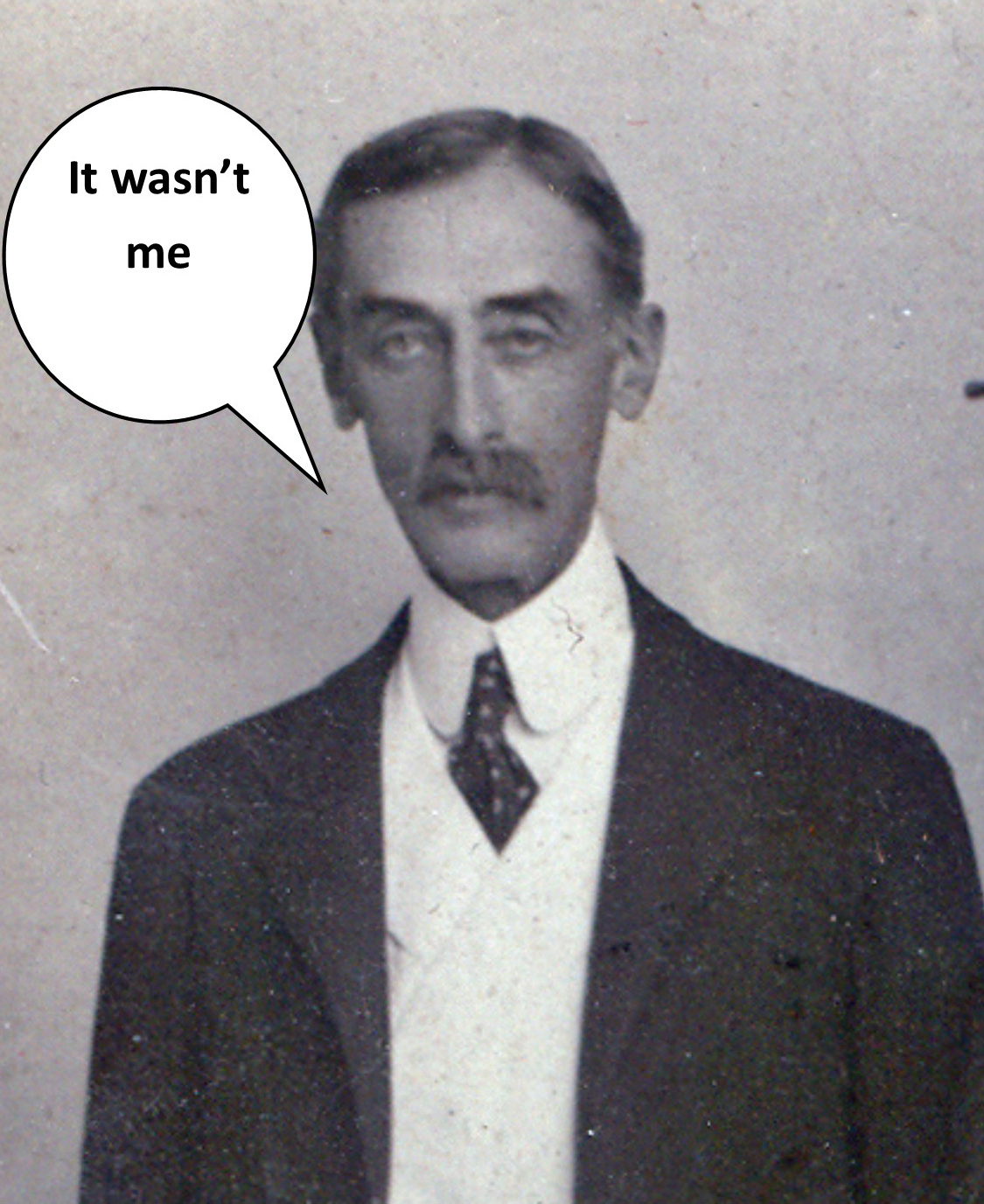
"The Gentleman Does Not Reason From Facts": Chancellor Robert R. Livingston and the Fight to Ratify the Constitution in New York

Not that George Clinton
When the Constitutional Convention adjourned in Philadelphia the fight to create a unified country out of thirteen individual states was far from over. In every state another convention was to be held where the leaders would decide whether or not to ratify the new Constitution. Influential individuals were still rife with fears left over from the Revolution; fear of a standing army, fear of a strong central government and fear of loss of control. New York was not exempted from these fears, in fact anti-federalist ideas may have been held even stronger by members of New York’s ratification convention as they had vivid recollections of the long British occupation of New York City and bitter fighting in a significant portion of the state. Chief among the anti-federalists was New York’s long time governor George Clinton.
Alexander Hamilton,
Not really important to the story but his name gets
the hits
That George Clinton
Yes I know I\’ve done this joke
before but its still funny damn it
The Constitution had many valiant defenders in New York, including Alexander Hamilton. Hamilton was not alone in these efforts though. He was ably joined by John Jay on the Federalist papers but on the debate floor it was Robert R. Livingston who became a force of nature although he receives almost no credit for his efforts.
Chancellor Robert R. Livingston
Smarter than you, richer than you and he knows it.
Livingston had not been in Philadelphia to help draft the Constitution although his name had been considered as a delegate. He had come to realize the importance of a strong central government during his time in the Continental Congress and as Secretary for Foreign Affairs. Following his time has secretary Livingston had returned to New York to reassert himself as the Chancellor of New York, a role which had been challenged while he was out of the state.
In Poughkeepsie, where the ratification convention was held, Chancellor Livingston quickly became notorious among the anti-federalists for converting their members to the federalist cause. He was known to single out members of their faction and take them to a tavern, sometimes with Jay or Hamilton, and ply them with food and drink until they had converted them to the federalist side. The anti-federalists simply had no one with the near bottomless purse of the Chancellor who could treat delegates in that fashion.[i]
Livingston’s influence was best shown on the floor of the debate though. He spoke frequently in a sarcastic and condescending tone about specific tones as well as the idea of anti-federalism in general. Melancton Smith was a frequent sparring partner of the Chancellor’s. Smith insisted that a federal system would be dominated by the aristocracy who would be by their very nature corrupt, or intemperate in his words.  To this the Chancellor replied:
Melancton Smith
Perhaps sparring partner is too strong,
maybe verbal punching bag?
“Will he presume to point out to us the class of men in which intemperance is not to be found? Is there less intemperance in feeding n beef than on turtle; or in drinking rum than wine? I think that the gentleman does not reason from facts.”
He went on to ask, rhetorically, who would lead the country in Smith’s world;
“But who in the name of common sense will he have to represent us? Not the rich; for they are sheer aristocrats. Not the learned, the wise, the virtuous for they are all aristocrats.”[ii]     
This sentiment echoed a point he had made in an oration to the New York Society of Cincinnati on July 4, 1787 when he said;
“Can it be thought that an enlightened people believe the science of government level to the meanest capacity? That experience, application, genius and education are unnecessary to those who are to frame laws for the government of the State.”[iii]
Clearly the Chancellor favored a strong central government led by the best society had to offer dedicated to what was best for the country as a whole. On June 24, 1788 Livingston found himself in the odd position of having to clearly explain the role of the senate to his fellow delegates after their status came up in the debates. He said;
“The Senate are indeed to represent the State governments; but they are also the representatives of the United States, and are not to consult the interest of any state alone but that of the union.”[iv]
            During the debates the Chancellor rarely let an opportunity pass to make a point without belittling anti-federalism. Once he compared anti-federalist arguments to “children blowing bubbles.” Later when disputing a point started with “let us see if we cannot, from all this rubbish, pick out something which may look like reasoning.” He could not.[v]
            When many anti-federalist insisted that the individual states should control separate military forces the Chancellor was forced to illustrate how ridiculous that idea was;
“How is Congress to defend us without a sword? You will also keep that. How shall it be handled? Shall we all take hold of it? I never knew, till now, the design of a curious image I have seen at the head of one of our newspapers. I am now convinced that the idea was prophetic in the printer. It was a figure of thirteen hands, in an awkward position, grasping a perpendicular sword. As the arms which supported it were on every side, I could see no way of moving it, but by drawing it through with the hazard of dangerously cutting their fingers.”[vi]
            If anything the Chancellor seemed to enjoy the enmity he earned from the antifederalists. When his tactics were questioned because they seemed to arouse so much hatred toward him he reportedly said “that if he had no wit himself, he had been the occasion of wit in others…”
            Not even family was safe from the Chancellor’s barbs. When a cousin, Gilbert Livingston, argued a point with the Chancellor, Livingston turned to the rest of the assemblage and said;
John Jay
A long time friend of the Chancellor until he
wasn\’t but that\’s a story for another day
“that my worthy kinsman across the table, regardless of our common ancestry, and the tender ties of blood, should join his dagger to the rest, and compel me to exclaim in the dying words of Caesar, “And thou, too, Brutus.””[vii]
Thoroughly rebuked, when the time came to vote on the Constitution, Gilbert voted with the Chancellor.
            New York’s delegates were still debating when word reached them that New Hampshire had ratified the Constitution. This meant that enough states had ratified the document that it could take effect. The Chancellor took the floor and declared “The confederation was now dissolved.” In short, there was no going back.
            In the end it was the Chancellor’s friend (at least at that point) John Jay who finally moved that the body vote to accept or reject the Constitution. After a final attempt to delay by the anti-federalists the Constitution was ratified in New York on July 26,1788.

The Chancellor can be seen in his judge\’s robe carefully orchestrating the hand shake between
George Clinton and Alexander Hamilton


[i]Dangerfield, George Chancellor Robert R. Livingston of New York, 1746-1813 p 224
[ii] The Debate on the Constitution Bernard Bailyn ed. P777-778
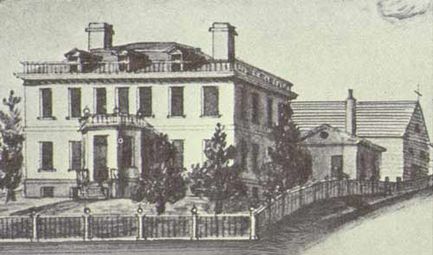
[iii]Livingston, Robert R. An Oration Delivered Before the Society of Cincinnati at the State of New York in Commemoration of the Fourth Day of July. p.10
[iv] The Debate Bailyn p 792
[v] The Debate Bailyn p 837
[vi]Elliot’s Debates Volume 2 p 386.
[vii]Elliot’s Debates Volume 2 p 394-395

The River Ran Backwards and Other Adventures of Robert R. Livingston\'s First Steamboat on the Mississippi River

Mississippi River icon
It is hard to imagine the Mississippi River without its iconic steamboats beating their way up and down stream. Even Mark Twain once wrote, of the steamboats on the Mississippi; “When I was a boy, there was but one permanent ambition among my comrades in our village on the west bank of the Mississippi River. That was, to be a steamboatman.” But before all of those boats began to ply the waters there must have been a first steamboat on the river. What was the story of that boat? Why are you reading about the Mississippi River this blog about the Hudson River Valley? The short answer to that one is that, its my blog I\’ll change the rules if I want.
Robert R. Livingston, had probably been
planning this for years.
Within days of the first successful voyage of the North River Steamboat in 1807 Robert Fulton and Robert R. Livingston’s thoughts had turned to spreading their new form of transport to the Mississippi River. Fulton wrote “I think it would be well to write to your brother Edward to get information on the velocity of the Mississippi, the size and form of boats used, the number of hands and quantity of tons in each boat, the number of miles they make against the current in twelve hours, and the quantity of tons which go up the river in a year. On this point beg him to be accurate.”
Robert Fulton
For once not the craziest part of the story
It took Fulton and Livingston four more years to complete their plans but in 1811 they began construction of the New Orleans at Pittsburgh. They had added another partner to the endeavor in the form of Nicholas J. Roosevelt, a distant uncle of Theodore Roosevelt. Roosevelt had helped Fulton and Livingston in the construction of the side mounted paddle wheels for the North River. In Pittsburgh he supervised the construction of the new boat which would be 146 feet 6 inches long and 32 feet 6 inches wide. The engine was built in New York and carried in pieces overland to Pittsburgh because there were no facilities for constructing such an engine in the city at the time.
The steam boat made its first successful test trip around Pittsburgh on October 15, 1811. Just five days later, on October 20 the New Orleans set out for New Orleans. Aboard her were Nicholas Roosevelt who would act as captain for the trip, his extremely pregnant wife Lydia and their first daughter. Nicholas Baker was the engineer for the trip and Andrew Jack was the pilot. There were also six deck hands, two maids for Lydia, a cook, a waiter and a large Newfoundland dog named Tiger.
A large Newfoundland Dog. Newfoundland Dogs have webbed feet which
makes them excellent swimmers.
On October 28 the New Orleans docked at Louisville. The steamboat would have to wait at Louisville nearly a month before the water rose high enough in the Ohio River to allow the boat to traverse the Falls of the Ohio, which were more like a series of shallow rapids than an actual waterfall. During the wait Roosevelt took the steamboat on several small excursions including a return to Cincinnati to prove that the boat could travel upstream. On October 30 Lydia Roosevelt gave birth aboard the New Orleans to a son they named Henry.
The New Orleans enters the Mississippi
They departed Louisville in late November to make their way over the Falls and after stopping to resupply into the Mississippi River. It was hoped that the Mississippi River would be relatively easy to cruise down. Andrew Jack had experience on the river and knew the channel well.
It was not an easy cruise to New Orleans.
On December 16, shortly after the New Orleans had entered the Mississippi, the New Madrid earthquake hit. This earthquake, which was actually an extended period of severe tremors, has been estimated up to an 8.0 on the Richter scale basically reshaped the Midwest. The entire channel of the Mississippi was erased, the course of the river changed dramatically. For about an hour after the most severe tremors the river actually ran backwards. Jack, the pilot, had no idea where he was and soon found himself navigating the boat over areas that only hours before had been fields or forests. Whole sections of the shore were dropping into the river, islands appeared and disappeared.  Tiger the dog would often give warning of a fresh tremor by putting his head in Lydia’s lap before it hit.
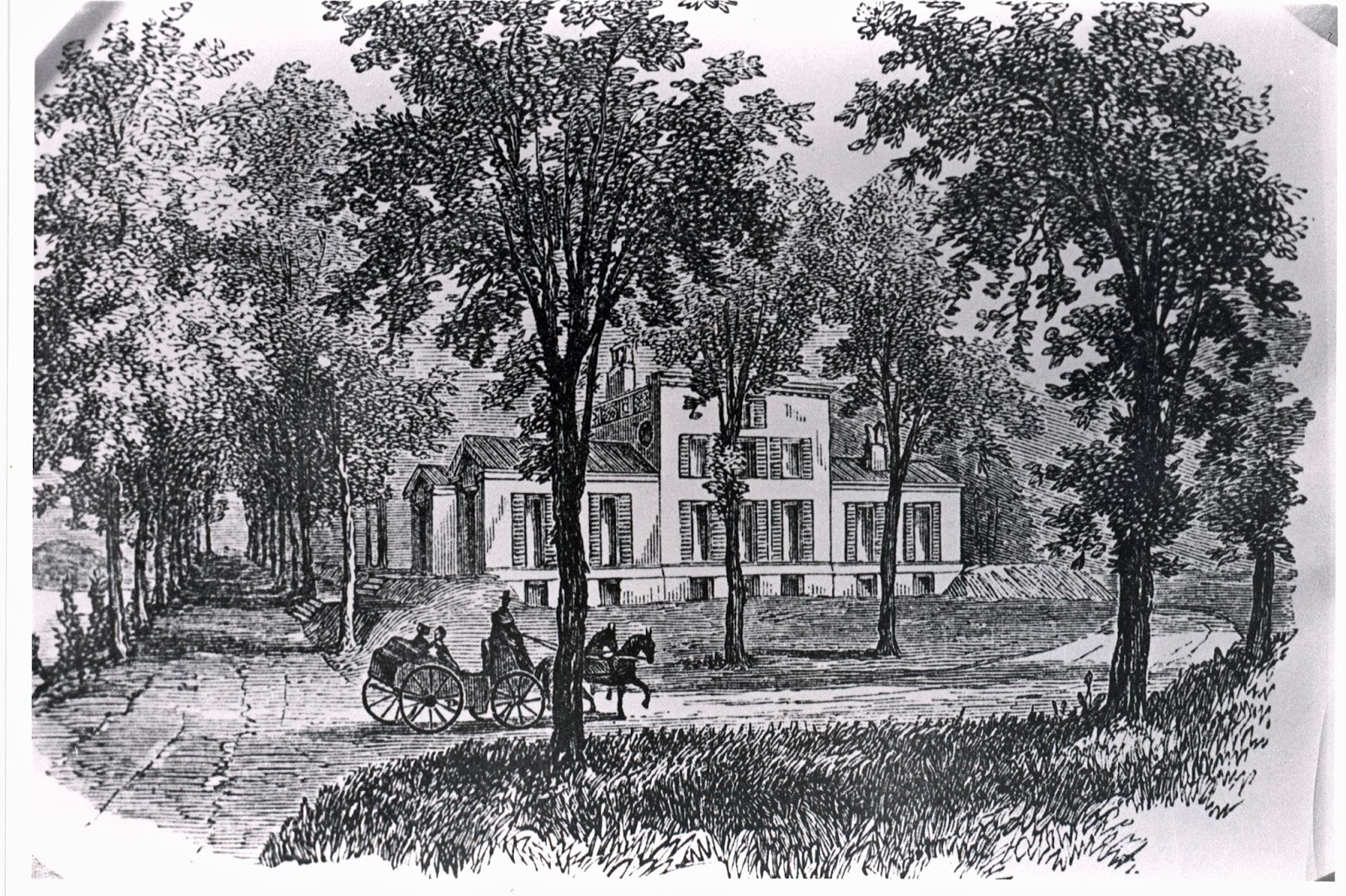
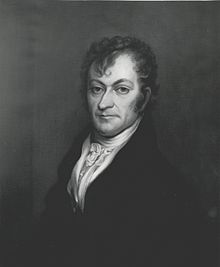
The New Orleans had to navigate a river full of obstacles and unknowns after
the earthquake
A few days after the worst of the tremors the New Orleans arrived in New Madrid itself. Houses had fallen into the holes that opened in the ground. Many people asked to be taken aboard but the steamboat had neither the space for all the refugees or the means to supply them.
The New Orleans finally arrived in New Orleans on January 10, 1812. It had spent a total of 259 hours cruising on the trip and averaged 8 mph. The time announced for the trip did not include all of the time lost stopping to wait for the right conditions or for other reasons.
In less than two weeks the New Orleans set out on the first voyage along the route that Livingston and Fulton had envisioned for it, New Orleans to Natchez and back. The ship could make 3mph upstream and 10mph downstream meaning she could complete a round trip every three weeks.  Fulton and Livingston began to sell stock in their steamboat which realized a profit estimated to be about $20,000 in its first year in operation. Edward Livingston also helped his brother and Fulton get a monopoly on steam travel in the territory. Violating the law would mean having to pay Fulton and Livingston $5,000 for each violation and forfeit any unauthorized steamboats to them.
The Chancellor did not live long enough to enjoy the monopoly on the river to its fullest; he died in 1813. The New Orleansmet its end in July of 1814. She snagged a log or some other obstruction near Baton Rouge which punctured her hull. The ship sank but her engine was removed and used in a later vessel of the same name.
In 1989 author Clive Cussler and his National Underwater and Marine Agency (NUMA) set out to try to find the final resting place of the original New Orleans. They surveyed the shore and were able to come up with a “ballpark” location for the boat but unfortunately the Army Corps of Engineers had laid a steel and concrete revetment mattress over the site in 1971 to help control erosion. This made finding an exact location using various forms of metal detectors impossible.
1911 \”replica\” of the New Orleans
I mean they are both boats…
Sources:
NUMA Expeditions New Orleans http://www.numa.net
A Critical Account of the Beginning of Steamboat Navigation on the Western Rivers of the United States, Pittsburg Legal Journal, Vol 59 No. 42 (21 October 1911) pp 570-591
The Rambler in North America by Charles Joseph Latrobe 1832-1833

The Sea Hunters II by Clive Cussler and Craig Dirgo G. Putnam’s Sons 2004

"Wholly Addicted to His Pleasure": Lord Cornbury\'s Dress


Edward Hyde, Earl of Clarendon and Viscount Cornbury is perhaps the most maligned royal governor that the colony of New York ever had. His reign from 1702 to 1708 was marked with greed, bribery and rampant misuse of public funds. Yet the thing he is most remembered for is this:
Lord Cornbury as remembered by history. If I was more tech savvy Aerosmith\’s \”Dude (Looks Like a Lady)\” would be playing right now.
That’s right. If one was to believe the rumors then Lord Cornbury really liked to dress in women’s clothes. Some historians believe that

Edward Hyde as he probably wanted to be remembered

Cornbury truly did parade around New York in full gowns. Other historians believe this was a started to discredit the governor by his political rivals in New York, chief among them Robert Livingston, 1stLord of Livingston Manor.
Livingston had been a fan of Cornbury’s when he first arrived in the colony, writing “My Lord is Extrem hearty to redresse all grievances, we must reckon it a duble mercy that God has been pleased to send him at this juncture.”[i]
Robert Livingston certainly had a way with words
Cornbury soon lost Livingston’s support though. After a harrowing trip to England that involved being briefly seized by French privateers and set adrift, Livingston spent about three years getting his accounts settled and getting his offices confirmed by the Queen. When he returned home in 1706 he found that the colonists were united against Cornbury who had been badly mismanaging the colony. When Livingston presented his commission as Secretary for Indian Affairs to Cornbury, Cornbury refused to recognize it despite Queen Anne’s signature. Cornbury apparently preferred to keep the money due to Livingston for his own use.[ii]
William Lowndes: this has nothing to do with Cornbury but this guy had at least 25 kids. So yeah…  
 In June of 1707 Robert Livingston wrote to William Lowndes of the Treasury;
“Tis said he is wholly addicted to his pleasure…his dressing himself in womens cloths commonly [every] morning is so unaccountable that if hundreds of spectators did not daily see him it would be incredible.”[iii]
Livingston\’s letter was the first in a series of letters to officials in England describing Cornbury’s odd habit. Later that year Lewis Morris, ancestor of Chancellor Robert R. Livingston’s good friend Gouverneur Morris and owner of the Morrisania estate in the Bronx wrote his own letter. It said:
Lewis Morris; helped ruined Cornbury over New Jersey. We might need to question his judgement.
“The scandal of his life is…he rarely fails at being dresst in Women’s cloaths every day, and almost half his time is spent that way, and seldome misses it on Sacrament day, was in that garb when his dead Lady was carried out of the Fort, and this not privately but in face of the sun and in sight of the Town. But I’ll not enter into his Privacies, his Publick Vices are scandalous enough.”
 In 1709 Morris wrote about Cornbury again:
“…that is his dressing publiqly in womans cloaths Every day and putting a stop to all publique business while he is pleasing himself with that peculiar but detestable magot.”[iv]
It should be noted that Morris was also an opponent of Cornbury’s. Cornbury had suspended Morris from the New Jersey provincial council. Morris was not reinstated until Cornbury was done as governor.
The last about the governor’s dressing habits came from the pen of Elias Neau, a Huguenot refugee turned merchant and catechist. Neau wrote:
“My Lord Cornbury has and dos still make use of an unfortunate Custom of dressing himself in womens cloaths and of exposing himself in that Garb on the Ramparts to the view of the public; in that dress he draws a world of Spectators about him and consequently as many Censures, especially for the exposing himself in such a manner all the great Holy days and even in an hour or two after going to the communion.”
Neau went one step further than the other writers and commented on Cornbury’s style as well:
“I am assured that he continues to dress himself in women’s cloths, but now tis after the Dutch Manner.”[v]
Not only was Cornbury dressing like a woman but he was dressing like a Dutch woman, not even a good English woman!
            Historian Patricia Bonomi assures us that the rumor of Cornbury’s cross dressing did not gain much traction in England or elsewhere in the colonies, yet some people did hear of it. A merchant from Boston wrote to an associate in New York;
 Baron von Bothmer: Liked to imagine Cornury in drag.
Muliebri Veste uti (women’s clothing), is instanced in as against the Law of Nature. It has been reported that a certain Gentleman at N. York used to practice that abomination. I should be glad to know the certainty of it.”[vi]
Several years later Hanoverian diplomat Baron von Bothmer wrote that he had heard that Cornbury “thought it was necessary for him, in order to represent her Majesty, to dress himself as a woman.”[vii]
            So it is at least possible that a royal governor of New York dressed like a woman. Perhaps he enjoyed it or, as Bothmer suggested, perhaps he took his job representing Queen Anne in the colonies a little too seriously. It is also possible that he was just an unpleasant man brought down in part by the combined efforts of Robert Livingston and a few other colonists whom he had offended. Either way Cornbury was replaced by John Lovelace, 4th Baron Lovelace in 1708. Cornbury returned to England, spent some time in debtors’ prison and was briefly an envoy to the court of Hanover. He died in 1723.


[i]Bonomi, Patricia U. The Lord Cornbury Scandal p59
[ii]Leder, Lawrence H. Robert Livingston p 200-202
[iii]Bonomi The Lord Cornbury Scandal p 158
[iv]Bonomi The Lord Cornbury Scandal p160
[v]Bonomi The Lord Cornbury Scandal p 161.
[vi]Bonomi The Lord Cornbury Scandal p 162
[vii]Bonomi The Lord Cornbury Scandal p 17