On December 31, 1775 General Richard Montgomery, husband of Janet Livingston, led a desperate attack on the British held city of Quebec. Leading one of three wings of the attack Montgomery found the first barrier he and his men faced undefended. He crossed with many of his sections officers and waited while a detachment of soldiers began tearing down the barrier to allow the main body of troops through. Suddenly at the end of the street Montgomery noticed movement in a fortified blockhouse. He knew well that the narrow street his men were using to enter the city would become a slaughterhouse if the defenders were able to fire a canon down the street from the blockhouse. He drew his sword and charged the house with his officers hoping to catch the defenders off guard. Unfortunately, the defending British and Canadians were not asleep and their canon spat grapeshot at the advancing Americans. Most of the officers fell, Montgomery had been hit by three balls, in the leg, groin and head. He died instantly.
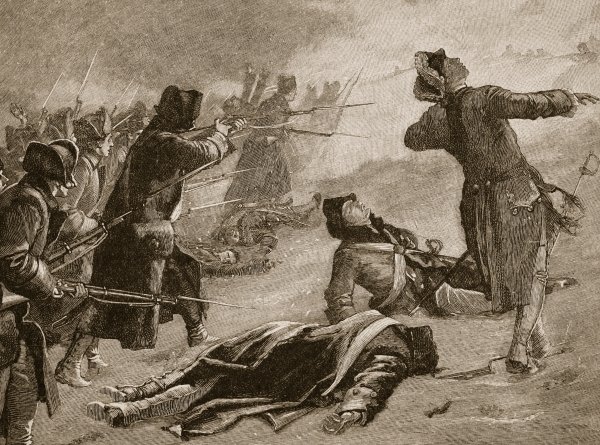 The attack on Quebec fell apart but the American army would stay around the city under the command of Benedict Arnold for several more months before a fighting retreat down Lake Champlain. Montgomery was a wealthy man, an experienced campaigner and had plenty of time to prepare for the campaign in New York, Livingston Manor and Albany so he was well equipped. So what happened to his stuff?
  His money, in various denominations was inventoried on January 2, 1776 to be sent back to New York. It amounted to a little over £ 347. In addition his watch and seal were recovered from his body and sent to the Americans and then back to Mrs. Montgomery. The General himself was buried in Quebec with full military honors. In 1818 his body was returned to New York.
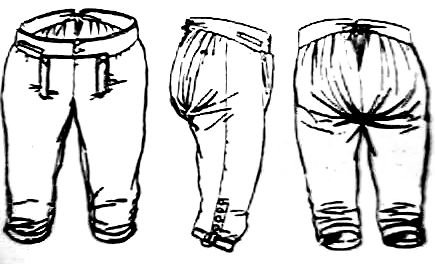 The single largest buyer at the auction was Benedict Arnold. His purchases included 3 ruffled shirts and six plain shirts, six cambric stocks, a silk neck cloth and three linen handkerchiefs. Arnold also purchased a pair of “casimere” (perhaps cashmere) breeches and matching waistcoat which were probably quite comfortable in the cold Canadian winter. Interestingly Arnold also purchased a pair of moccasins and “elegant Indian leggins”. Because they are described as “Indian” the leggings were most likely leather, worn to protect one’s stockings from being destroyed when walking through the woods.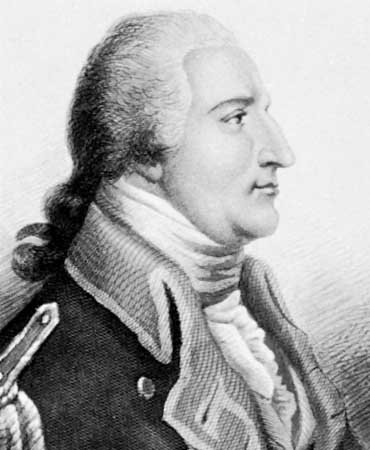
All in all the inventory of Montgomery’s personal goods gives us a good idea of the type of man the Montgomery was. He was a man fully dedicated to the cause; nothing in the inventory obviously indicated his life with Janet. Everything he carried was what was viewed as necessary for an eighteenth century military officer on campaign. Nothing more to remember his life at home and nothing less, which could have lowered other opinions of him.
 Geoff Benton